Find Top Internships for Graphic Design in NYC 2026
You're probably in the same place a lot of young designers hit when they start aiming at New York. Your portfolio has a few solid projects, your Adobe files are finally organized, and you keep searching internships for graphic design in nyc hoping one listing will somehow tell you exactly where you belong. It won't. NYC is too broad for that.
The smart move isn't chasing any internship with a recognizable logo. It's choosing the kind of internship that gives you the kind of work you want to get hired for next. Editorial design leads somewhere different than experiential design. Institutional systems work builds a different portfolio than agency branding. If you treat the internship like a strategic first rung, your next job search gets easier.
Before you send applications, tighten the one thing every hiring manager looks at first: the portfolio. If your work feels generic, you disappear. If it shows decision-making, range, and taste, you get remembered. That matters whether you're applying to a museum, a newsroom, or a brand studio. If your current work leans heavily social, sharpen your understanding of essential social media graphic design and then push beyond it into systems, typography, and campaign thinking.
A great NYC portfolio shows not just what you can do, but how you think. It's a visual argument for your unique creative perspective.
1. The Museum of Modern Art MoMA
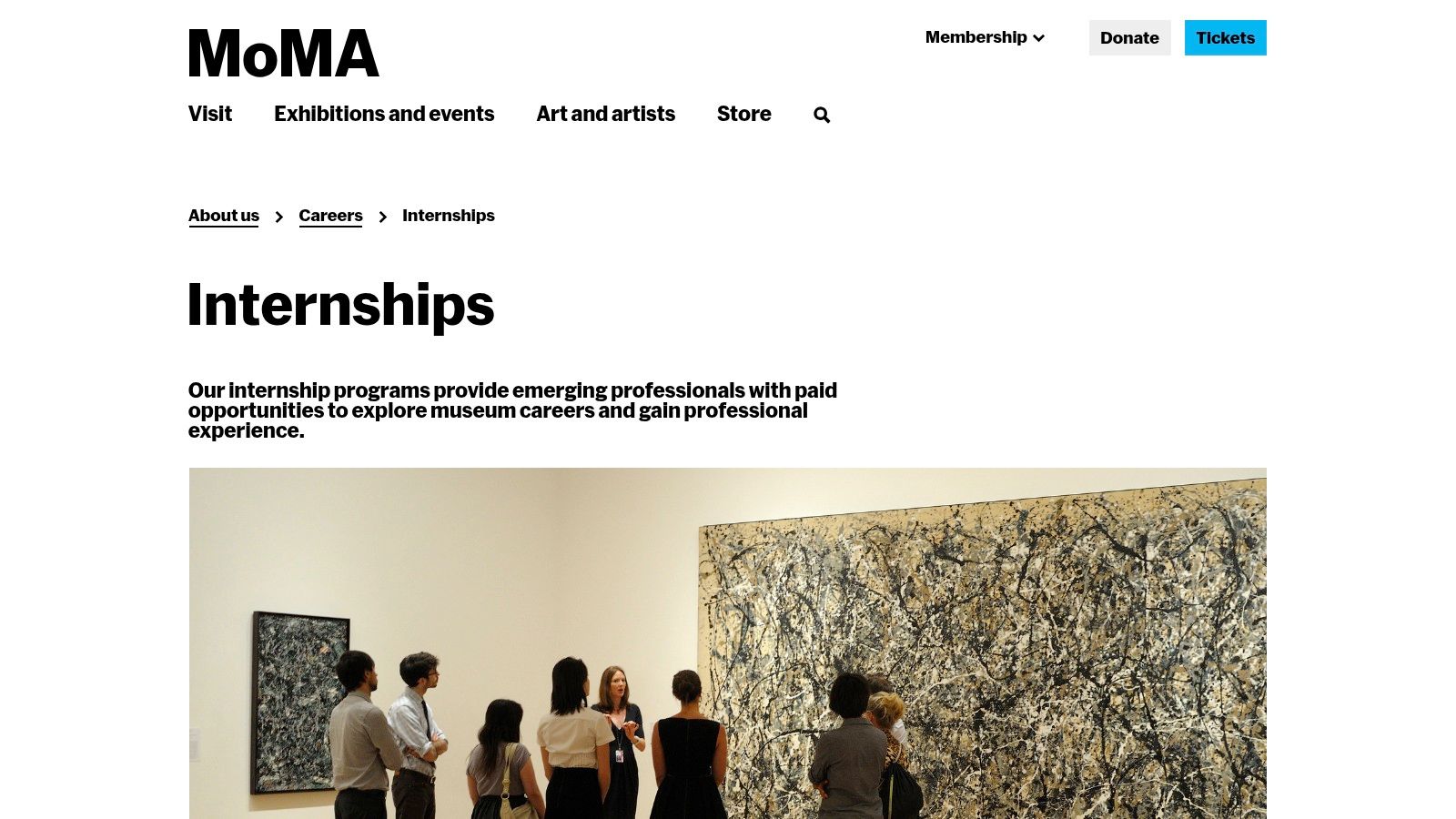
MoMA is where you go if you want your portfolio to signal cultural fluency, typographic restraint, and comfort working inside a highly considered institution. The internship value isn't just the name. It's the kind of thinking the environment forces on you. Museum design work usually rewards clarity, hierarchy, pacing, and respect for content over decoration.
That matters in hiring. When I see museum-based work in a student portfolio, I'm usually looking for whether the designer can handle information-heavy communication without losing elegance. Exhibition collateral, interpretive graphics, promotional assets, and identity extensions all reveal whether you understand systems or only one-off visuals.
Best for editorial and institutional design paths
MoMA internships can make sense if you want to move toward editorial design, cultural branding, publishing, design research, or in-house creative at an arts institution. The strongest portfolio outcome here is a system, not a single poster. Show how typography, grids, signage logic, digital promos, and printed matter connect.
A few practical trade-offs matter:
- Best portfolio payoff: You can build work that feels intelligent and enduring, which helps if you want to apply to museums, publishers, or brand studios with a strong cultural client base.
- What can disappoint: Department needs can shift, so one term may give you more production support than concept-heavy authorship.
- What hiring managers want from you: Strong type, careful composition, research discipline, and the ability to work with curators or non-design stakeholders.
Museum internships reward designers who can make complex content legible without flattening it.
Don't apply to MoMA internships with a portfolio full of trendy mockups and no evidence of structure. Include at least one project with long-form hierarchy, one with a brand system, and one that shows you can work across print and digital.
2. NBCUniversal
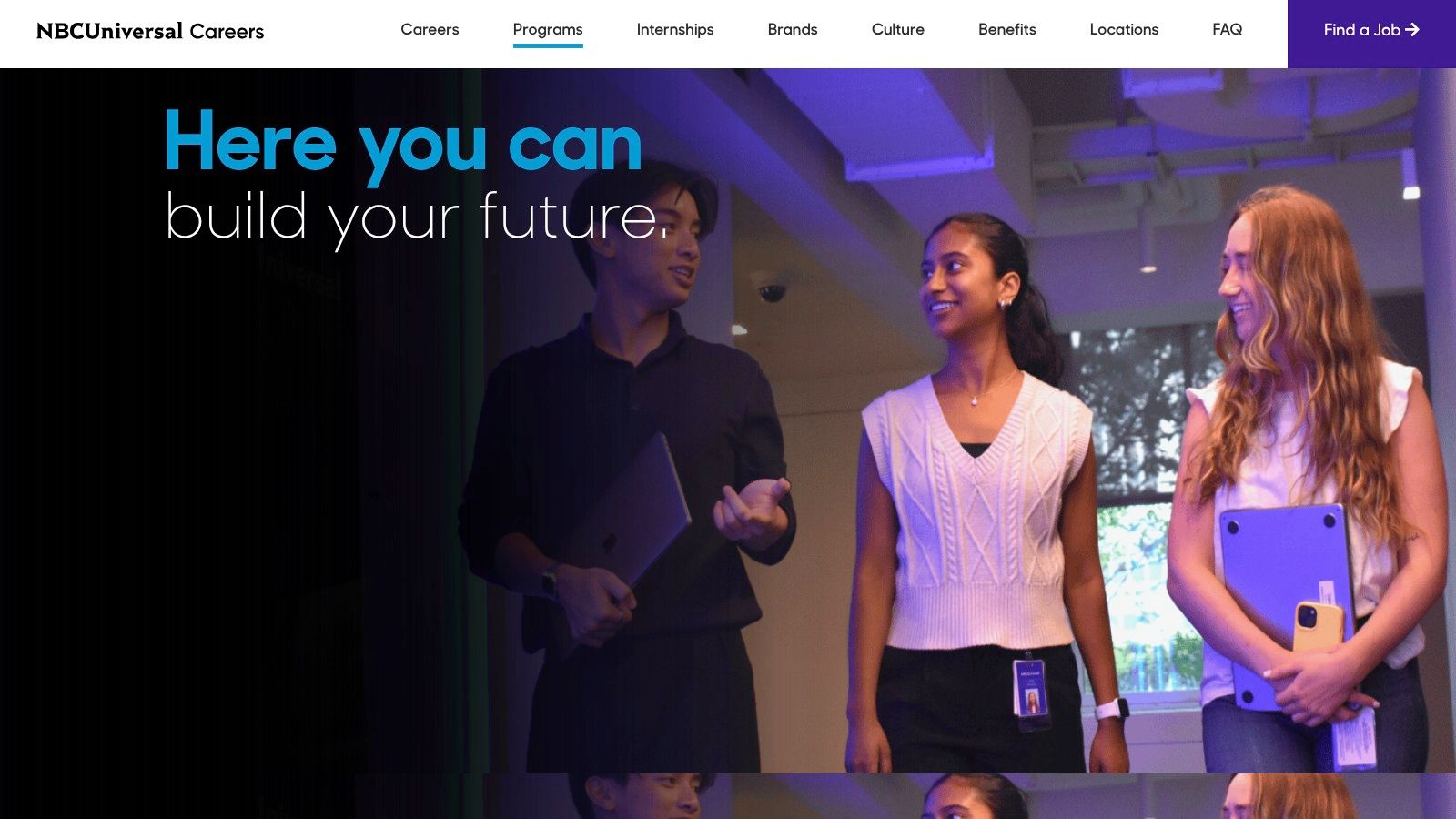
The assignment hits your inbox at 10:12 a.m. A story is moving, social needs assets fast, the homepage crop is different from the app crop, and nobody cares that your mockup looked cleaner yesterday. That is the value of an NBCUniversal internship. It tests whether your design holds up under editorial pressure, platform constraints, and constant revision.
The portfolio upside is specific. You can leave with work that shows range across news graphics, social packaging, digital promotions, and motion-aware design systems. Hiring managers read that differently than a school project with one polished hero image. They see a designer who understands speed, hierarchy, and how content changes once it meets a real audience.
Best for media design, content systems, and platform-facing careers
NBCUniversal makes the most sense for students aiming at media companies, in-house brand teams, entertainment marketing, digital publishing, or creative roles that sit close to product and audience growth. The strongest portfolio pieces here usually are not poster-style one-offs. They are content systems. Social templates, recurring show packages, responsive promo assets, and visual frameworks that can adapt across homepage, app, video, and platform placements.
That matters because early-career designers often over-index on taste and under-show operational thinking. Media teams need both.
What tends to stand out in applications here:
- Show pace: Include work built as a series, not just a single frame. News promos, episodic social graphics, thumbnail families, or campaign rollouts work well.
- Show editorial judgment: Cropping, hierarchy, image choice, and restraint matter more than decorative style in a live content environment.
- Show format awareness: Present projects across multiple aspect ratios and surfaces so reviewers can see that you understand distribution, not just composition.
- Show production maturity: Hiring teams want someone comfortable in Adobe tools who can take feedback quickly and keep files organized under pressure.
The trade-off is straightforward. Fast-turn media work can sharpen your instincts quickly, but it can also limit how much time you get for concept development or refined craft on any single asset. If your goal is a portfolio full of slow, highly authored identity work, this may feel fragmented. If your goal is to become the designer who can solve real communication problems at speed, it is strong training.
Go directly to the NBCUniversal internship program if you want portfolio pieces that prove you can design inside a live content machine, not just in a presentation deck.
3. Penguin Random House
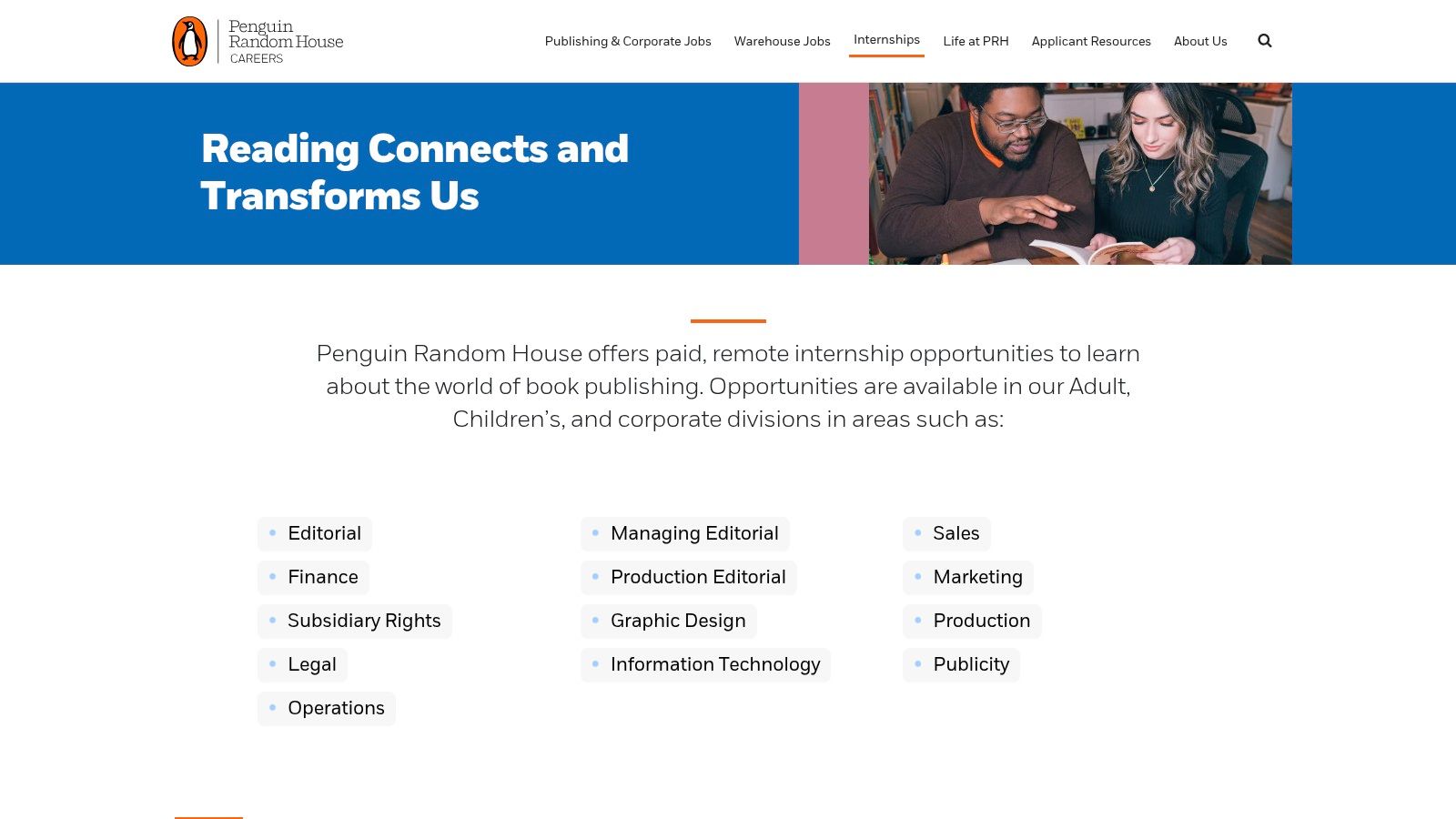
Publishing internships are underrated by students who think they need agency work to look serious. That's a mistake. A strong publishing portfolio can say a lot about your taste level, typography, restraint, and ability to create emotional differentiation without relying on visual noise.
Penguin Random House is especially useful if you want to build around covers, launch graphics, marketing assets, and campaign thinking tied to narrative. Good publishing design teaches sequencing. You're not just designing an object. You're designing how a title shows up in stores, on social, in email, and in promotional ecosystems.
Best for editorial taste and concept-led portfolios
If you want to become a book cover designer, editorial designer, art director, or brand designer with strong typographic instincts, this is the kind of internship that can sharpen your eye fast. The work often rewards nuance. Hiring managers notice that.
The trade-off is obvious. Remote structure can reduce the classic NYC studio osmosis that happens when you overhear reviews, production decisions, and presentation strategy in person. But if you're disciplined, the portfolio outcome can still be excellent because the work itself tends to be concept-driven.
Use the Penguin Random House internships page to track openings and timelines.
What makes an application stronger here:
- Lead with typography: If your type feels weak, your chances drop.
- Include narrative thinking: Show projects where concept and audience clearly shaped the visual direction.
- Prove range without chaos: One literary-feeling project, one commercial-feeling project, and one promotional system is a better mix than ten unrelated experiments.
The best publishing candidates don't just make things look good. They make readers feel the right thing before a single page is opened.
4. Cooper Hewitt, Smithsonian Design Museum
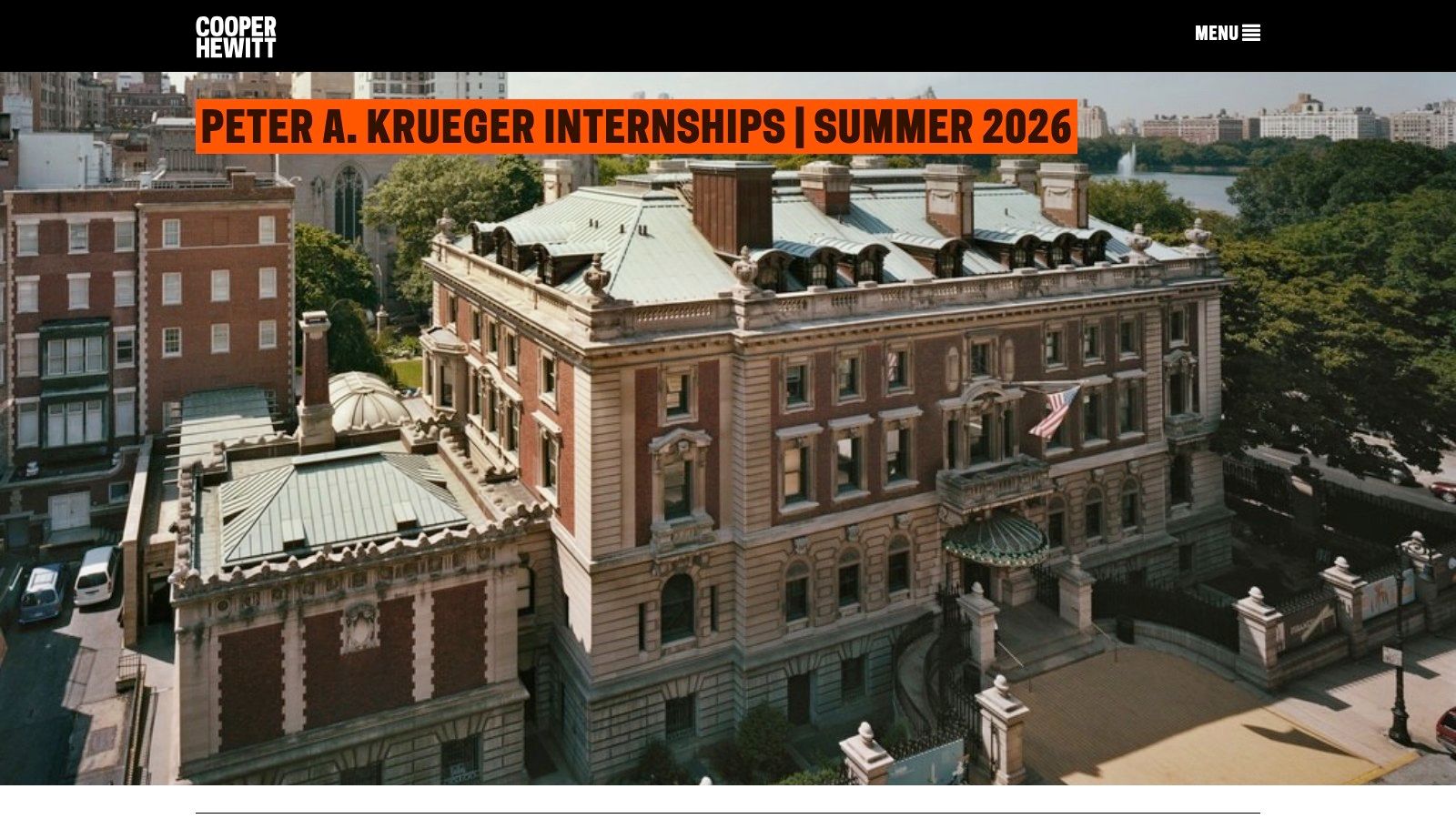
A hiring manager opens your portfolio and sees exhibition graphics, event promotions, accessible layouts, and a tight institutional system that holds together across print and digital. That reads differently from a portfolio full of startup logos and social ads. Cooper Hewitt carries that kind of signal.
The Peter A. Krueger program has publicly listed a dedicated Graphic Design track for undergraduates through the museum's internship department descriptions, along with details on stipend, schedule, and expected time commitment. Based on how the museum has described the program, applicants should expect a structured summer role with clear expectations rather than a loosely defined creative internship. You can review the museum's posted program details on the Cooper Hewitt internship department descriptions page.
Best for institutional systems, exhibition communications, and public-facing design
The primary value here is the type of work. This track sits inside Communications and Marketing, so the strongest portfolio outcome is usually not a flashy one-off. It is a disciplined set of assets tied to exhibitions, programming, visitor communication, and the museum's broader identity. That matters if you want to move toward cultural institutions, nonprofit design, in-house brand teams, or product roles that care about structured communication systems, including paths adjacent to a product design internship at Coinbase.
In practice, that means your best samples for this application are not random class exercises. Show work that proves you can build hierarchy, handle dense information, and keep a visual system consistent across formats. A museum team will notice whether your typography can carry content without decoration doing all the work.
What stands out here:
- System thinking: Show one project with a repeatable logic. Posters, email, signage, social, landing page, or program guide all working from the same rules.
- Accessibility judgment: Speak clearly about legibility, contrast, reading order, and audience context. Museum design is public communication, not self-expression alone.
- Editorial restraint: White space, pacing, and hierarchy matter more here than visual tricks.
- Written rationale: If you cannot explain why a layout works for the viewer, the work feels less mature.
There is a trade-off. Cooper Hewitt can strengthen your credibility fast, but the portfolio pieces may look quieter than agency campaign work. That is fine if the quiet work is sharp. Good museum design shows control, and hiring teams who know what they're looking at respect that.
5. Gensler
Gensler is a different animal from museums or publishers. If your brain naturally thinks in environments, flows, signage, identity systems, and how branding behaves in physical space, this is the internship type to target. It's one of the clearest routes into experiential graphic design.
A lot of student portfolios stop at logos and social posts. Gensler-style brand design pushes you beyond that into wayfinding, environmental graphics, spatial storytelling, and large-scale systems. That's valuable because it shows hiring teams you can think past the rectangle of a screen.
Best for experiential and system-level design careers
If your goal is environmental graphic design, branded spaces, retail systems, workplace branding, hospitality graphics, or multidisciplinary brand experience, Gensler can move you in that direction. It also helps if you think you may eventually move into digital experience work inside larger strategy-led organizations, similar to how some internships can lead designers toward roles like a product design internship path in crypto.
The strongest applicants usually show more than visual taste. They show structure. A good project for this audience might include identity, signage logic, spatial mockups, and rules for application.
Watch the trade-offs:
- Big-firm upside: You can learn how large teams document, present, and operationalize design.
- Big-firm downside: Some internship experiences can skew toward support work, depending on studio needs.
- Portfolio risk: Don't fake environmental work with weak mockups. If the application looks cosmetic, reviewers can tell.
Explore current opportunities through Gensler internships. If you're applying, include one project that proves you can build a system people have to interact with, not just admire.
6. The Working Assembly
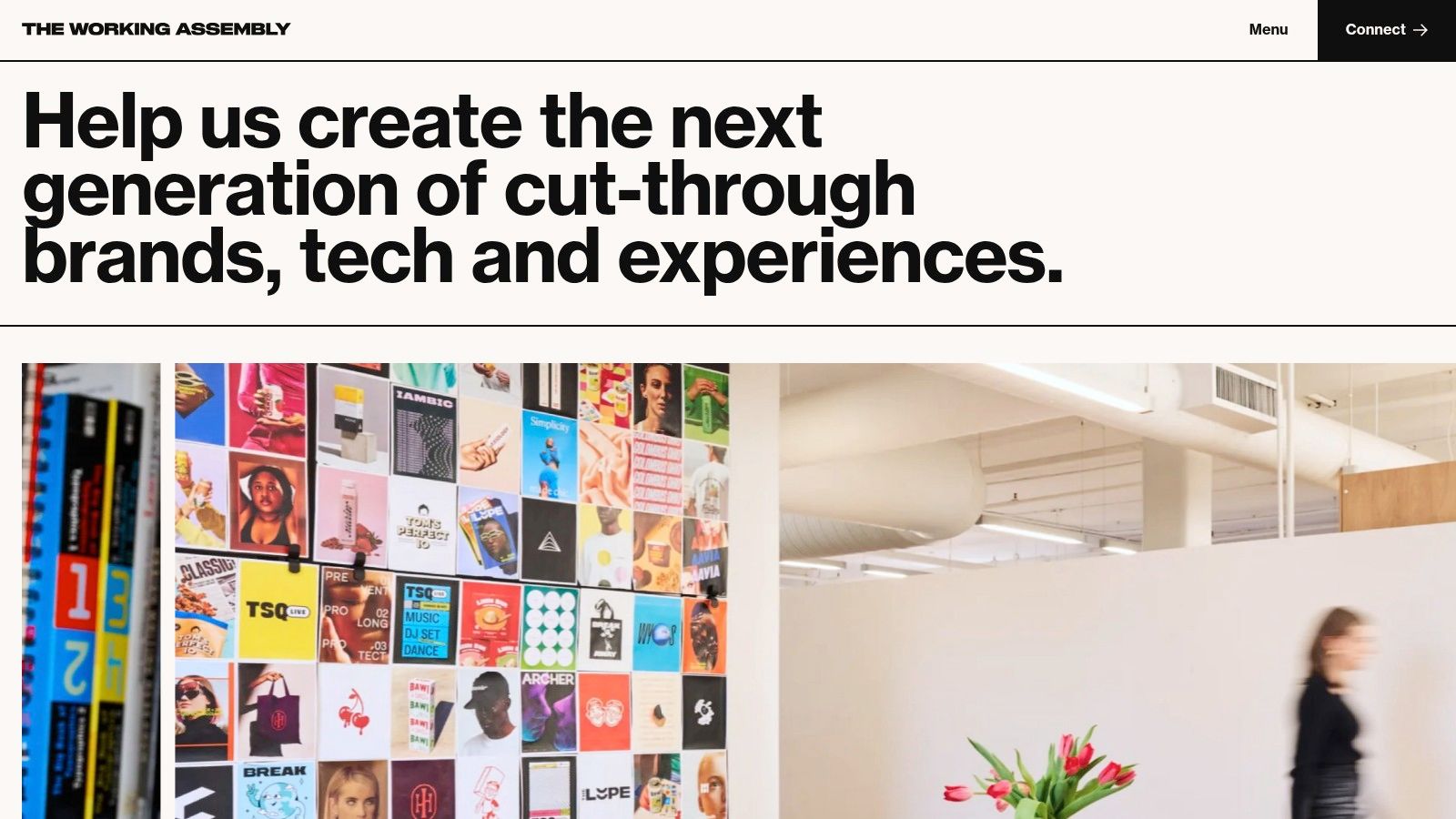
Boutique agency internships can be better than famous corporate ones if you want actual reps. The Working Assembly is the kind of place where a design intern may get closer to strategy, presentation work, identity development, and day-to-day feedback loops that sharpen judgment quickly.
Small teams don't have the same insulation as large organizations. That's good for learning, as long as you can handle ambiguity and revision. You'll usually see more of the full process, from early concepting to deck-building to final rollout.
Best for branding careers and agency readiness
This is a strong fit if you want to become a brand designer, junior art director, or agency designer who can move from moodboards to identity systems to campaign applications without losing coherence. In hiring, portfolios from boutique studio environments often stand out when they show sharper authorship and stronger storytelling around the work.
A few realities to keep in mind:
- Mentorship can be closer: Smaller studios often give faster, more candid feedback.
- Seat count is tighter: Fewer internship slots means less margin for an average portfolio.
- On-site expectations matter: If you want fully remote flexibility, this may not be your lane.
Practical rule: For boutique agency internships, your portfolio presentation matters almost as much as the work itself. Weak pacing, sloppy captions, or confused case studies will cost you.
Go to The Working Assembly careers page and study how the studio presents itself before you apply. Your portfolio should echo the level of rigor they expect, not copy the aesthetic.
7. MATTE Projects
MATTE Projects is for the designer who wants their work to leave the screen and hit the room. If you care about activations, event branding, environmental moments, campaign worlds, and the production reality behind them, this is a more useful target than a traditional corporate internship.
Experiential design sounds glamorous to students because they imagine launch parties and cool installations. Yet, the work involved is less romantic and more valuable. It involves systems, vendor coordination, production files, digital support assets, on-site adaptation, and a lot of problem-solving when the physical world refuses to behave like a mockup.
Best for experiential portfolios that feel alive
This path makes sense if you want to work in branded environments, event design, culture marketing, fashion-adjacent creative, or integrated campaigns. It also overlaps with digital interface thinking more than people expect, because event ecosystems often need landing pages, motion graphics, social teasers, and post-event content. That cross-over is one reason some designers who start here later consider roles such as a UI UX designer internship in Web3.
For a practical market read, NYC remains one of the largest internship markets for this field. Handshake currently shows more than 14 graphic design internships in New York, NY, which supports what most applicants already feel on the ground. The city has steady demand, but the work types vary a lot.
What separates strong applicants for MATTE-style roles:
- Show physical thinking: Include branded environments, signage, merch systems, or event collateral, even if they're self-initiated.
- Show production awareness: File setup, material thinking, scaling, and adaptability matter.
- Show energy without mess: Experiential work can get loud fast. The best portfolios keep control.
Use the MATTE Projects site and keep checking openings. Studios like this can move quickly, and late applicants usually miss the best window.
NYC Graphic Design Internships, 7-Program Comparison
| Program | 🔄 Implementation complexity | ⚡ Resource requirements | 📊 Expected outcomes | 💡 Ideal use cases | ⭐ Key advantages |
|---|---|---|---|---|---|
| The Museum of Modern Art (MoMA) | High competition; portfolio-driven; cross-department variability | NYC on-site; paid internships; access to archives and curators | Prestigious credential; exhibition collateral and design research experience | Designers seeking museum/curatorial and systems exposure | Brand recognition; cross‑functional and archival access |
| NBCUniversal (NBC News Creative & Digital) | Structured, fast-paced newsroom workflows; clear timelines | NYC on-site (30 Rock); paid hourly; formal training and networking | Polished on-air and digital deliverables; rapid production skills | Candidates targeting broadcast, digital media, and tight deadlines | High-velocity experience; strong training and clear skill requirements |
| Penguin Random House (Graphic Design) | Clear, structured application and onboarding; remote collaboration workflows | Fully remote (U.S.); paid with defined weekly hours; publishing tools | Publishing-focused portfolio (covers, marketing, social) | Aspiring publishing designers who need remote flexibility | Focused publishing work; transparent process and scheduling |
| Cooper Hewitt, Smithsonian (Graphic Design) | Selective with fixed deadlines; portfolio required; in-person summer program | In-person NYC; $7,000 stipend; 35 hrs/week for summer track | Institutional design for exhibitions and public programs | Undergraduates seeking Smithsonian/museum design experience | Mission-driven briefs; clear responsibilities and stipend |
| Gensler (Brand Design) | Variable by office; interdisciplinary and client-driven complexity | Firm resources and training; client projects; competitive NYC slots | System-level identity, experiential graphics, and cross-discipline work | Designers aiming for firm-level brand and experiential practice | Blue-chip firm name; cross-disciplinary mentorship and client exposure |
| The Working Assembly (Brand Design) | Boutique studio process; hands-on and fast feedback cycles | On-site several days/week; small-team mentorship; client diversity | End-to-end branding pieces and presentation-ready portfolio work | Designers wanting close mentorship and full-brand workflows | Close mentorship; rapid iteration; strategic branding experience |
| MATTE Projects (Graphic/Experiential) | Dynamic, production-heavy workflows; postings change rapidly | On-site NYC; event/activation production; compensation varies | Experiential installations, live-event assets, and production files | Designers focused on experiential work and live activations | Strong experiential portfolio opportunities; tight studio teams |
Beyond the List Your Ongoing Internship Hunt
You send 30 applications in a week, hear nothing back, and assume the market is dead. Usually, the problem is not volume. It is targeting.
A strong NYC internship search works like a studio pipeline. Keep a tight list of places that match the kind of portfolio you want to build, check their career pages directly, and apply with work that fits their practice. If you want exhibition and cultural work, watch museum and institutional teams. If you want brand systems, track agencies and architecture firms. If you want live activations, follow studios that produce events, launches, and installations. The point is not to collect logos on your resume. It is to get the kind of assignments that move you toward the next role.
Good candidates also stop relying on one source. AIGA chapter boards, design newsletters, faculty referrals, alumni groups, and school career portals still surface opportunities before broad job boards do. Parsons, SVA, Pratt, and FIT carry weight in New York for a reason. Hiring teams know what kind of critique culture and software fluency often come out of those programs. Graduates should still use those networks.
What hiring managers actually notice
Hiring managers do not spend much time decoding a messy portfolio. Clear work gets the interview.
They look for a few things fast:
- Fit for the studio or company: Show editorial work for publishing roles, systems work for brand teams, experiential comps for production-heavy studios, and institutional thinking for museums.
- Craft: Typography, grid control, pacing, hierarchy, image selection, and presentation matter. Sloppy mockups and weak typesetting kill otherwise decent ideas.
- Judgment: A small, focused portfolio beats a bloated one. Six strong projects with a clear role statement usually perform better than 14 mixed-quality pieces.
- Process clarity: Captions should explain the brief, the constraint, what you owned, and what changed because of your decisions.
- File discipline: Interns are often hired for potential, but teams still want someone who can package files, name layers, prep decks, and stay organized.
If your portfolio still reads like a gallery instead of a hiring tool, study what a digital portfolio is and how it should function before the next round of applications.
Pay, format, and the reality of the market
Compensation, schedule, and structure vary widely across NYC internships. As noted earlier, some public-sector roles have posted clear hourly ranges and defined deadlines. That matters less than students think. What matters more is whether the internship gives you real work, regular feedback, and pieces you can show later.
In-office roles still have an advantage in New York. You learn faster when you can overhear critique, watch how senior designers present, and ask production questions in the moment. Hybrid can work well if the team is organized and the on-site days are purposeful. Remote internships are worth considering only if the scope is clear and the design lead actually critiques your work. If the role is mostly resizing assets in isolation, it will not help much.
Persistence helps, but smart persistence helps more. Target fewer places. Tailor every application. Follow up like a professional. Build your search around the kind of designer you want to become, whether that is editorial, cultural, brand systems, or experiential. That is the angle many applicants miss.
If you are also looking beyond traditional studios, Blockchain Jobs can be one more channel to watch for design, product, marketing, and cross-functional roles at Web3 companies.