How to Become a Block Chain Engineer: A Career Guide for 2026
Think of a blockchain engineer as the master architect and builder for the decentralized world. They are the highly specialized software engineers who lay the foundation for Web3 applications, using a mix of distributed ledger technology, smart contracts, and cryptography. For a hiring manager, these are the people building the secure, high-stakes systems that power everything from new financial markets to decentralized social media.
What Does a Blockchain Engineer Actually Do?

Before diving into skills and interview prep, let's clarify what this job entails from a hiring and career progression perspective. A common mistake candidates make is assuming all blockchain engineers have the same responsibilities. The reality is that the field is highly specialized, and understanding these differences is key to positioning yourself for the right role.
For hiring managers, the job is about more than finding someone who can write code. It's about finding an engineer who can build secure, stable, and economically sound digital systems. A single bug in a smart contract can lead to the irreversible loss of millions of dollars. The stakes are much higher than in traditional software jobs, which is why a deep understanding of security and system design is a non-negotiable trait they look for in every candidate.
Core Responsibilities and Daily Tasks
The role goes way beyond just programming. A blockchain engineer’s primary job is to translate complex business requirements into secure, automated, and transparent processes that live on-chain. This requires a unique blend of software development, systems architecture, and even a bit of economic game theory.
Here’s what you'll be expected to do:
- Designing and Developing Smart Contracts: This is the core skill for most roles. It involves writing, testing, and deploying the self-executing code that powers decentralized applications (DApps). Your ability to write secure, gas-efficient code will be directly tested in interviews.
- Architecting Blockchain Protocols: More senior engineers design the foundational rules of a network, including its consensus mechanism, tokenomics, and governance structure. This is a high-impact area that commands top salaries.
- Building and Maintaining DApps: This involves creating the full-stack applications that interact with the blockchain, ensuring a seamless and secure user experience. This skill set is crucial for product-focused companies.
- Ensuring Network Security: A massive part of the job is conducting rigorous code audits, running security tests, and applying best practices to defend against hacks. To see what top companies expect, check out this blockchain security engineer role at a leading company.
In an interview, demonstrating that you "think like an attacker" is a huge plus. Top candidates don't just build what they're told; they anticipate how a system could be exploited and design defenses against those scenarios before a single line of code is deployed. This is the mindset that gets you hired.
Common Blockchain Engineer Specializations
As the industry matures, the general "blockchain engineer" title has splintered into more focused roles. Targeting a specialty makes you a much more compelling candidate and clarifies your career path.
- Core Blockchain Developer: Works on the blockchain network itself—the consensus protocol (e.g., Proof-of-Stake), P2P networking, and core architecture. This is a systems-level role ideal for those with a strong computer science background.
- Smart Contract Developer: Specializes in languages like Solidity or Rust to build the application logic that runs on-chain. This is the most common role and the backbone of DeFi, NFTs, and DAOs.
- DApp/Full-Stack Developer: Connects the blockchain to the user by building the front-end and back-end that allow people to interact with smart contracts. This role bridges the gap between Web2 and Web3.
Knowing these distinctions helps you tailor your resume and interview preparation. Whether you want to build the foundation of a new L1 protocol or create a user-facing DApp, your career journey starts with choosing a specialization.
The Blockchain Engineer's Tech Stack: Skills That Get You Hired
So, what skills does it take to land a job as a blockchain engineer? The tech stack is unique and requires a different way of thinking about software, especially regarding security and architecture. This isn't just about learning a new language; it's about mastering a new paradigm.
Let’s break down the stack into the three core areas that will be scrutinized in your technical interviews. Being proficient in one is good, but the engineers who receive offers from top-tier companies demonstrate deep expertise across all three.
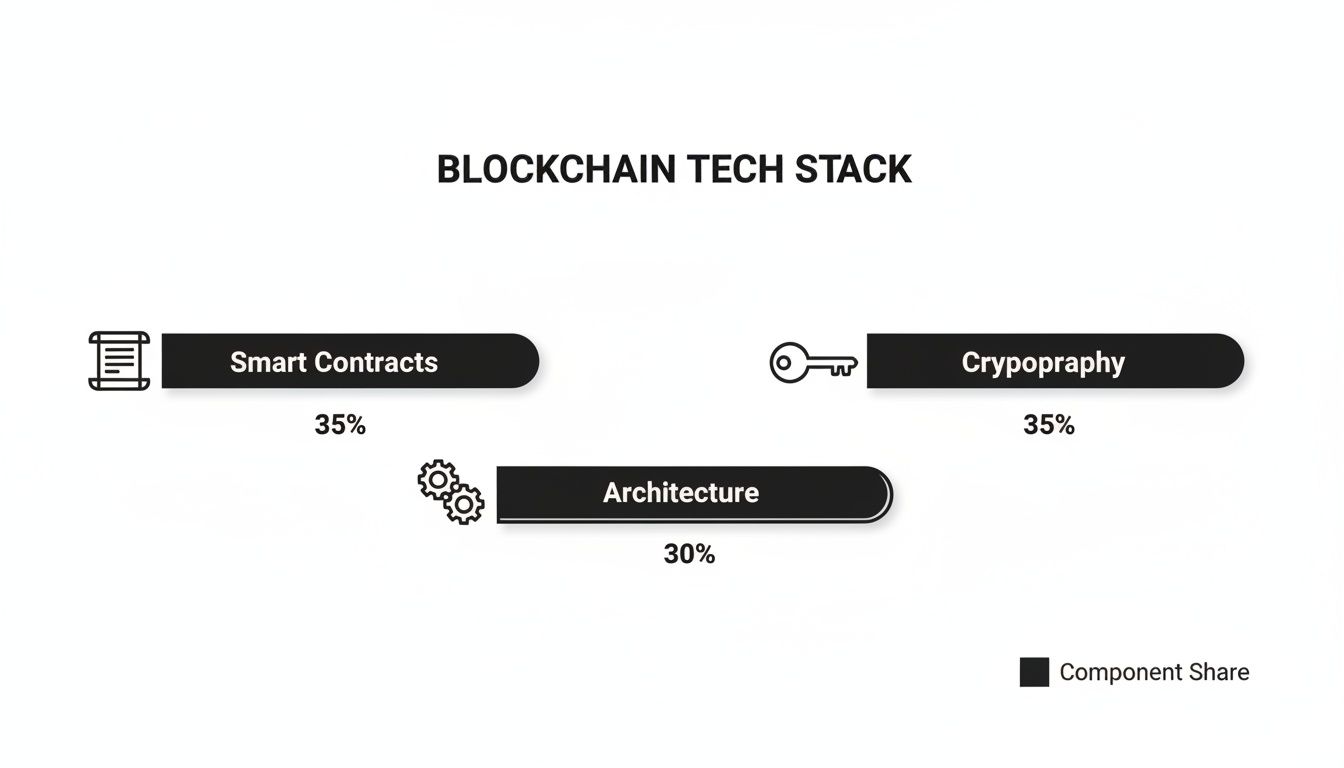
Smart Contract Mastery
Smart contracts are the heart of most blockchain applications. Your ability to write secure and optimized smart contracts is the single most important skill hiring managers look for, and it will be tested exhaustively during interviews.
Solidity for EVM Chains: Solidity is the dominant language for the EVM (Ethereum Virtual Machine) ecosystem, which includes Ethereum, Polygon, and Avalanche. If you want a job in DeFi, NFTs, or DAOs, you must know Solidity. Be prepared for interview questions on security patterns (like Checks-Effects-Interactions), preventing reentrancy attacks, and advanced gas optimization techniques.
Rust for High-Performance Chains: Ecosystems like Solana, Sui, and Polkadot favor Rust for its performance and memory safety—critical features for building at scale. The demand for Rust engineers is surging, and having it on your resume signals you are a forward-thinking candidate prepared for the industry's future.
In an interview, being able to articulate the trade-offs—like Solidity's ease of use versus Rust's compile-time safety guarantees—is a clear sign of a senior-level candidate.
Understanding Blockchain Architecture
You can't be just an application developer in this space; you must understand the infrastructure you're building on. This deep architectural knowledge is what separates a junior developer who follows tutorials from a true engineer who can design robust systems from scratch. This is the focus of the system design interview.
This comes down to two key areas:
- Consensus Mechanisms: You need to be able to explain the difference between Proof-of-Work (PoW) and Proof-of-Stake (PoS) with practical depth. Don't just recite definitions. Discuss the security and economic trade-offs. Be ready to answer questions like: Why did Ethereum move to PoS? What new attack vectors did "The Merge" introduce?
- Data Structures: A solid grasp of how Merkle Trees and hash functions work is non-negotiable. You should be able to walk an interviewer through how these structures ensure data integrity and enable efficient verification on a distributed ledger.
A classic senior-level interview prompt is to design a simple blockchain on a whiteboard. Your ability to explain how blocks connect, how transactions are validated, and how consensus is achieved is the ultimate test of your foundational knowledge.
Cryptography and Security Fundamentals
Cryptography provides the trust in a trustless system. While you don't need to be a world-class cryptographer, a practical working knowledge of core concepts is mandatory. A single cryptographic mistake can lead to a catastrophic, multi-million dollar exploit.
For any interview, be ready to confidently explain:
- Hash Functions: Their properties (deterministic, collision-resistant) and their role in creating the immutable "chain" in "blockchain."
- Public/Private Key Pairs: How this asymmetric cryptography enables ownership and transaction signing without passwords.
- Digital Signatures: How they provide non-repudiation, proving that a specific wallet owner authorized a transaction.
In Web3, security isn't a feature; it's the foundation. A senior smart contract engineer’s primary job is to be paranoid. This security-first mindset is what makes them so valuable and in-demand. If this is your passion, you can learn more about senior smart contract engineer roles at leading organizations and see the level of expertise top companies require.
The Developer's Power Tools
Finally, proficiency with industry-standard tools shows an employer you can be productive from day one.
- Development Frameworks: You'll work in tools like Hardhat (JavaScript-based) and Foundry (Rust-based). They help you compile, test, and deploy contracts. Experience with Foundry is increasingly sought after for its speed and advanced testing capabilities like fuzzing.
- Client Libraries: To build a DApp, you'll need libraries like Ethers.js or Web3.js. They are the bridge that allows a front-end application to interact with your on-chain smart contracts.
A GitHub profile with projects built using these tools is the most effective way to demonstrate your practical skills and make your resume stand out to recruiters.
Understanding Blockchain Engineer Salaries and Market Demand
In Web3, your salary directly reflects the value and security you can provide. For a blockchain engineer, understanding the market is crucial for negotiating offers and planning your career progression. The simple truth is that the demand for developers who can build and safeguard decentralized systems far outstrips the supply, creating a highly competitive salary landscape and giving skilled candidates significant leverage.
This isn’t just about high numbers; it’s about the market placing a massive premium on a high-stakes skill set. Companies know a single smart contract vulnerability can be fatal, so they are willing to pay top dollar for engineers who can build secure, resilient systems. This dynamic is what drives the impressive compensation packages.
The Pay Bumps: What to Expect as You Gain Experience
The salary trajectory for a blockchain engineer is steep, with major pay increases tied to experience and impact. This is a rare field where a few years of hands-on experience can dramatically multiply your earning potential as you progress from fixing bugs to architecting entire decentralized ecosystems.
The market in 2026 shows a clear and rewarding career path. The salary jump from junior to senior roles is one of the most significant in the tech industry, proving that mastering the difficult blend of blockchain architecture, protocol development, and security brings serious financial rewards. You can dive deeper into compensation trends in this 2026 crypto salary report.
Blockchain Engineer Salary Progression by Experience Level (2026)
This table breaks down typical base salary ranges for blockchain engineers, illustrating the significant earning potential as you build expertise.
| Experience Level | Years of Experience | Salary Range | Average Salary |
|---|---|---|---|
| Junior Blockchain Engineer | 0-2 Years | $95,000 - $130,000 | $112,500 |
| Mid-Level Blockchain Engineer | 3-5 Years | $130,000 - $180,000 | $155,000 |
| Senior Blockchain Engineer | 5+ Years | $180,000 - $250,000+ | $215,000 |
This data clearly shows that gaining hands-on, practical experience is the fastest way to increase your compensation in the blockchain space.
The nearly 91% increase in average salary from a junior to a senior blockchain engineer is no accident. It highlights the massive premium companies place on proven, real-world experience. They aren't just paying for years on a resume; they're investing in battle-tested expertise to build secure and scalable systems.
Factors That Shape Your Compensation
Years of experience are just one part of the equation. From a hiring manager's perspective, several other factors signal the impact you can have and influence your offer.
Specialization and Location
Your niche matters. An engineer specializing in DeFi protocol security or Layer 2 scaling solutions is in higher demand than one with experience in basic NFT minting contracts. Why? The former requires a deeper grasp of economic models, game theory, and sophisticated attack vectors—skills that are rare and highly valued.
Location also plays a role, though remote work is leveling the playing field. Major tech hubs may offer higher base salaries, but many companies now offer competitive global salaries to attract top talent. To get a real-time feel for the market, browse the latest blockchain engineering jobs and see what companies are offering right now.
A Practical Roadmap to Becoming a Blockchain Engineer

Knowing the theory is one thing, but proving you can apply it is what gets you hired. This is especially true for those transitioning from traditional Web2 roles. In blockchain, a hands-on portfolio is not just recommended—it's essential.
Hiring managers in this space care about one thing above all: what you have built.
Your portfolio is your new resume. It's the hard evidence that you can think through complex architectures, prioritize security, and ship a working product. A well-maintained GitHub profile speaks volumes more than any certificate because it’s a living demonstration of your problem-solving abilities and the fastest way to get an interview.
This roadmap is designed to get you from learning to building, creating a project portfolio that immediately grabs an employer's attention.
Build a Portfolio That Solves Real Problems
Your portfolio should tell a story of your skills and engineering growth. Forget building another generic to-do list DApp. Instead, tackle projects that solve genuine Web3 challenges. This signals to employers that you understand the landscape and can think critically about creating value.
Start with a foundational project and increase complexity. This not only cements your skills but also shows a clear learning trajectory to any hiring manager reviewing your work.
Here are a few project ideas that teach practical skills and stand out on a resume:
- A Secure Multi-Signature Wallet: This is a brilliant first project. It forces you to master core concepts like ownership, transaction signing, and on-chain access control. It demonstrates you can manage state securely and build systems with complex approval logic.
- A Decentralized Identity (DID) System: Identity is a major challenge in Web3. Building a system where users control their own data via verifiable credentials shows you grasp public key cryptography and data privacy, proving you can think beyond finance.
- A Simple Yield Farming Aggregator: This project throws you into the deep end of DeFi. It requires you to write smart contracts that interact with other protocols like Aave or Compound. This proves your ability to handle complex financial logic, integrate with external contracts, and optimize for gas—all critical skills for a DeFi role.
When a hiring manager sees projects like these, they don't just see code. They see an engineer who understands security, interoperability, and the economic building blocks of Web3. That's the candidate who gets an interview.
Your GitHub Is Your Story
Treat your GitHub profile as a professional gallery, not a code junkyard. Each project repository needs a detailed README.md file that acts as a mini-case study for your work.
A strong README should include:
- The Problem: What specific challenge does this project solve?
- The Solution: How did you architect the system? Explain key technical decisions and your reasoning.
- How to Run It: Provide clear, step-by-step instructions for local setup and testing.
- Lessons Learned: What was the hardest part? What would you do differently? This shows self-reflection and a commitment to improvement.
Accelerate Your Career with Community Involvement
Building projects in isolation is good, but building within the community is a game-changer for career progression. Getting involved in the wider Web3 ecosystem is the fastest way to learn, grow your network, and get on the radar of hiring companies.
Two strategies have a massive impact:
- Contribute to Open-Source Protocols: Find a project you admire and start contributing. Begin by fixing small bugs, improving documentation, or adding tests. This is the single best way to learn from senior engineers and prove you can contribute to a production-level codebase.
- Participate in Hackathons: Hackathons are intense, weekend-long sprints to build something new. They are an incredible environment for accelerated learning and networking. You’ll walk away with a new portfolio project and connections to founders, VCs, and other developers.
By combining focused project work with active community participation, you create a powerful feedback loop. You build, you learn, you connect, and you prove your value. This is the most reliable path to landing your first—or next—role as a blockchain engineer.
How to Ace the Blockchain Engineer Interview

Landing a blockchain engineer interview is a huge win, but that’s when the real work starts. Web3 interviews are a different beast. They go beyond typical coding challenges to probe your security mindset and architectural judgment, because a single mistake can cost millions.
Your resume gets your foot in the door, so it must speak the right language. Focus on the impact you made, not just your responsibilities. For instance, "optimized smart contract gas usage, reducing average transaction costs by 20%" is far more powerful than "wrote gas-efficient code." This framing shows you understand the business implications of your technical work.
Navigating the Interview Gauntlet
The blockchain engineer interview process is a multi-stage marathon designed to test different facets of your skill set. Knowing what to expect is your best advantage.
A common interview sequence looks like this:
- The HR Screen: A culture fit and motivation check. They’ll assess your passion for their specific project and check salary expectations. Be ready to explain why you want to work for them, not just any Web3 company.
- The Technical Screen: A live coding session or take-home test focusing on data structures, algorithms, and core blockchain concepts.
- The System Design Interview: You'll be asked to architect a decentralized system from the ground up, testing your big-picture thinking and ability to handle complex trade-offs.
- The Security Audit: You may be given a vulnerable smart contract and asked to find and fix the flaws. This is your chance to prove you have a security-first mindset.
The Take-Home Smart Contract Challenge
Many companies use a take-home assignment to evaluate your entire engineering process. This isn’t just about your Solidity or Rust skills; they’re assessing your code quality, documentation, and, most importantly, your testing and security rigor.
Your submission should be production-quality. This means a complete test suite covering edge cases, a detailed README explaining your design choices, and clear code comments. Extra effort here signals professionalism and gets you to the next round.
If auditing a contract, deliver a formal report. Methodically identify vulnerabilities like reentrancy, integer overflows, or oracle manipulation. For each issue, explain the potential impact and provide a coded fix. This proves you are a security-minded engineer, not just a developer.
The System Design Deep Dive
The system design round is where senior candidates shine. You might get a prompt like "design a decentralized governance module" or "architect a Layer 2 scaling solution." The goal is not to give a perfect answer but to demonstrate how you think.
Start by asking clarifying questions to define the requirements. Use a whiteboard to map out your architecture. Most importantly, talk through your trade-offs.
For example, when designing a governance system, you should discuss the pros and cons of on-chain vs. off-chain voting (gas costs vs. censorship resistance) or the security implications of adding a time-lock. This real-time reasoning demonstrates the strategic thinking required of a senior blockchain engineer.
The high bar for these roles is reflected in the market. Today, blockchain engineers earn an average of $159,000, with the median salary climbing to $181,000. These figures show that compensation is directly tied to your ability to handle these complex technical and security challenges. You can explore more salary data on Web3.career's developer salary data. Proving your expertise during the interview is critical for landing a top-tier offer.
Your Questions About a Blockchain Engineering Career Answered
As you explore a career in blockchain engineering, many questions arise. It’s a complex and rapidly evolving field, so it's smart to seek clarity on what the job entails and what your long-term career progression might look like.
Let's address the most common questions from aspiring engineers and hiring managers to give you direct, actionable answers.
Do I Need a Computer Science Degree?
No, a formal Computer Science degree is not a strict requirement. While a CS background provides a strong theoretical foundation, the Web3 world is famously meritocratic. What you can do and what you have built are far more important than your diploma.
Many top blockchain engineers are self-taught or transitioned from other fields. Your real credential is your portfolio. A GitHub profile showcasing well-documented projects—like a multi-sig wallet or a DeFi lending protocol—is tangible proof of your ability to build secure, functional systems. Focus on building, learning, and demonstrating your skills through your work.
What Is the Most Difficult Part of the Job?
Without a doubt, the hardest part is the immense, relentless pressure of security. In a typical web application, a bug can be patched and deployed with minimal long-term damage.
In blockchain, the stakes are completely different. A single flaw in a smart contract can lead to the instant, irreversible loss of millions of dollars. There are no do-overs. This "code is law" reality forces a security-first mindset that is far more rigorous than in traditional software development. Your job involves constant vigilance, thinking about formal verification, deep code audits, and every conceivable attack vector, from reentrancy to oracle manipulation.
The second-biggest challenge is keeping up. The ecosystem moves at a breakneck speed. New protocols, scaling solutions, and security best practices emerge constantly. To stay relevant and advance your career, you must be a dedicated lifelong learner.
This combination of high-stakes security and a fast-paced environment makes the job demanding, but for those who thrive on challenges, it's also what makes it exceptionally rewarding.
How Important Are Economics and Game Theory?
They are critically important, especially for senior roles or anyone working on protocol design or DeFi applications. This knowledge is what separates a good coder from a great blockchain systems architect. At their core, blockchains are economic networks.
Your job isn't just to write functional code; it's to design "cryptoeconomic" systems. You must create rules and incentives that motivate thousands of anonymous, self-interested actors to behave in a way that benefits and secures the entire network. Game theory is the tool you use to model potential attacks and design incentive structures that make honesty the most profitable strategy.
For example, when designing a Proof-of-Stake system, you must perfectly balance staking rewards for honest validators against slashing penalties for malicious behavior. A flawed economic model can lead to system collapse. For any senior-level interview, demonstrating this skill is non-negotiable.
Where Are the Best Places to Find Jobs?
While you can find some roles on general job boards like LinkedIn, the best opportunities are on specialized Web3 platforms. Niche job boards are valuable because they connect you directly with serious companies in the space, cutting through the noise.
However, the single most effective job-hunting strategy is community involvement. Simply applying to job postings is not enough to land the top roles.
- Engage in Project Discords: Become an active, helpful member in the developer channels of protocols you admire.
- Contribute on Twitter (X): Follow key builders and projects, join technical discussions, and share what you're working on.
- Attend Hackathons: These events are career accelerators. You'll meet founders, network with other builders, and may even walk away with a job offer.
This is how you find unlisted jobs and build the direct relationships that lead to a top-tier career as a blockchain engineer.
Ready to find your place in the decentralized future? At Blockchain Jobs, we connect talented professionals with leading companies in the Web3 space. Whether you're an aspiring blockchain engineer or a seasoned protocol architect, our platform features curated roles in DeFi, NFTs, and beyond. Explore the latest opportunities and take the next step in your career at https://blockchain-jobs.com.