
Top 7 Platforms for DevOps Engineer Jobs Remote in Web3 for 2025
The decentralized web is scaling at an unprecedented rate, and at its core are the infrastructure experts who keep it running. For skilled professionals, the demand for devops engineer jobs remote within the Web3 and blockchain space has never been higher. But navigating this niche market requires more than just technical skill; it demands knowing where to look and how to position yourself for success.
This guide moves beyond generic job board lists. We'll dissect the top platforms to find your next remote Web3 DevOps role, providing actionable insights into crafting a standout application, acing the technical interview, and accelerating your career progression in this exciting, fast-paced ecosystem. We focus on the practical steps that get you hired, from tailoring your resume for blockchain-specific challenges to demonstrating the right mindset during interviews.
You'll get a direct, no-nonsense breakdown of the best places to find high-impact roles, complete with screenshots and links to get you started immediately. We analyze each platform through the lens of a hiring manager, highlighting what makes a candidate stand out in the Web3 DevOps field. This curated roundup solves the primary problem for job seekers: cutting through the noise to find quality, fully remote opportunities that align with their career goals. Whether you are a seasoned SRE or a cloud engineer transitioning into blockchain, this is your roadmap to landing a premium remote position in 2025. This article provides the strategic advantage needed to secure top-tier devops engineer jobs remote and advance your career in the innovative world of decentralized technology.
1. Blockchain Jobs: Your Niche Gateway to Curated Web3 Roles
For any DevOps engineer targeting a career in decentralized technology, generic, high-volume job boards often create more noise than signal. Blockchain Jobs distinguishes itself by cutting through this clutter, offering an experience exclusively tailored to the Web3 ecosystem. This niche focus is its most significant advantage, ensuring that every listing for a devops engineer jobs remote position is relevant, legitimate, and from a company operating at the forefront of blockchain innovation. Instead of sifting through thousands of corporate IT roles, you get a curated feed of opportunities from DeFi protocols, NFT marketplaces, and layer-1 foundations.
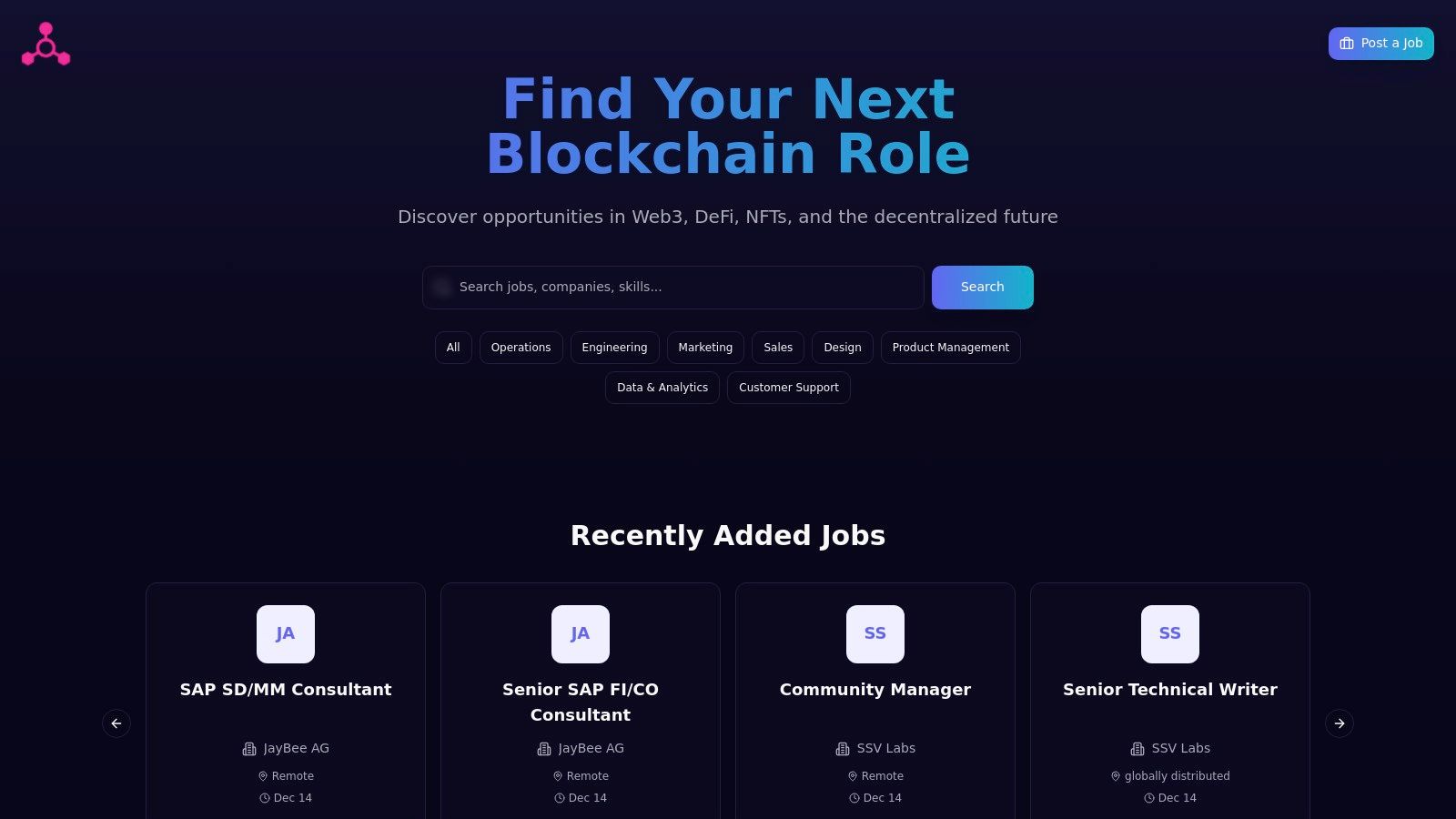
This platform represents a collection of high-signal opportunities. Leading Web3 organizations like Uniswap Labs and Tether consistently post here because they know they will attract talent that deeply understands the unique infrastructure challenges inherent to blockchain technology, such as node management, network security, and decentralized deployments.
Why It Stands Out for DevOps Professionals
Blockchain Jobs is more than a simple job board; it's a career accelerator for Web3-focused engineers. Its value lies in its specificity and the quality of its listings. The platform's remote-friendly filtering and clear category tags allow you to quickly identify roles that match your expertise and lifestyle preferences, streamlining the job search process.
The "Recently Added Jobs" and "Recently Filled Positions" feeds provide crucial market intelligence. From a career progression perspective, you can track which companies are scaling their infrastructure teams and identify the skills that are in highest demand, allowing you to proactively upskill and position yourself for future opportunities.
Actionable Tips for Getting Hired via Blockchain Jobs
To maximize your success on this platform, your application materials must speak the language of Web3. Your resume and cover letter need to go beyond standard DevOps competencies.
- Highlight Blockchain-Specific Tooling: Don't just list AWS, Kubernetes, and Terraform. Emphasize your experience with running validator nodes, managing infrastructure for dApps, or leveraging blockchain-as-a-service providers like Infura or Alchemy. Frame these skills in terms of business impact, such as "ensured 99.99% uptime for a high-volume staking network."
- Demonstrate Contextual Understanding: Your application should articulate not just how you build and manage infrastructure, but why it's fundamentally different in a decentralized context. In an interview, be prepared to discuss challenges related to consensus mechanisms, peer-to-peer networking, and the security implications of immutability.
- Showcase Your Passion: Mention contributions to open-source Web3 projects, participation in hackathons, or even a personal blog where you analyze blockchain infrastructure. This demonstrates genuine interest and sets you apart from candidates simply looking for any remote role. This is often a key differentiator for hiring managers.
A tangible example is the DevOps Engineer - 100% Remote opening at Tether, a role that explicitly requires a deep understanding of both cloud infrastructure and the nuances of stablecoin operations. Using this platform allows you to find opportunities where your specialized skills are not just a 'nice-to-have' but a core, non-negotiable requirement.
| Feature Analysis | Benefit for DevOps Engineers |
|---|---|
| Niche Web3 Focus | Eliminates irrelevant listings, ensuring every role is directly related to blockchain, crypto, or decentralized tech. |
| High-Signal Employers | Access to roles from established and emerging leaders in the Web3 space who are seeking specialized talent. |
| Curated Job Feeds | Provides real-time market insights on hiring trends and recently filled positions, aiding in strategic career planning. |
| Remote-First Filtering | Simplifies the search for fully distributed roles, catering directly to the modern devops engineer jobs remote seeker. |
While the platform’s job volume may fluctuate with the Web3 market cycles more than a generalist site like LinkedIn, the quality and relevance of the listings are consistently superior for anyone committed to a career in this space. For employers, the pricing model requires direct contact, which can add a step to the process, but this curated approach ensures they connect with a highly qualified and motivated talent pool.
Website: https://blockchain-jobs.com
2. LinkedIn Jobs
As the world’s largest professional network, LinkedIn Jobs is an indispensable resource for anyone searching for devops engineer jobs remote. Its sheer scale means it offers unparalleled coverage, from nimble Web3 startups to Fortune 500 corporations venturing into blockchain. The platform’s true power, however, lies in its integration with your professional profile and network, transforming a simple job search into a strategic career move.
How to Maximize LinkedIn for Your DevOps Job Search
LinkedIn is more than a job board; it's a networking engine. To stand out, go beyond just hitting "Apply." First, optimize your profile with keywords like "CI/CD," "Kubernetes," "Terraform," and "blockchain" to attract recruiters using LinkedIn's search tools. Think of your headline and "About" section as your personal SEO—make them count.
Next, leverage the platform’s networking capabilities. When you find an interesting remote DevOps role, don't just apply blindly. Check for connections at the company, whether first or second-degree, and request a warm introduction or an informational chat. A referral can dramatically increase your chances of landing an interview.
Actionable Tip: Use the "Alumni" tool on a company’s LinkedIn page. Find people from your university who work there and reach out. A message like, "Hi [Name], I'm a fellow [University] alum and saw the remote DevOps role at [Company]. I'd love to learn more about your experience there if you have 15 minutes," is professional and often effective.
Key Features and Strategic Application
LinkedIn’s filtering system is robust, allowing you to narrow down thousands of listings to find the perfect remote role. Use the "Remote" filter in combination with location settings (like "United States") and seniority levels to fine-tune your search.
Here’s how to use its features to your advantage:
- Easy Apply: While convenient, use it selectively. For top-priority roles, always opt to apply directly on the company’s career page if possible. This often shows greater intent and gets your application into the primary ATS (Applicant Tracking System).
- Job Alerts: Set up multiple, specific alerts for "remote DevOps engineer," "Web3 SRE," and similar variations to get new listings delivered directly to your inbox. This ensures you're among the first applicants, which can be a significant advantage.
- LinkedIn Premium: The "Applicant Insights" feature shows how your skills stack up against other applicants. Use this data to tailor your resume, highlighting the skills where you excel and addressing potential gaps in your cover letter.
While some postings redirect to clunky external application systems, the platform's ability to connect you with hiring managers and insiders is unmatched. This direct line of communication is invaluable, especially in the competitive Web3 space. For a look at how Web3 companies like Figment structure their DevOps roles, you can review a sample DevOps Engineer job description to better prepare your application materials.
Visit the website: LinkedIn Jobs
3. Indeed
As one of the world's largest job aggregators, Indeed is a powerhouse for finding devops engineer jobs remote. Its vast database pulls in listings from company career pages, other job boards, and direct postings, creating an extensive collection of opportunities. For DevOps professionals, this means a high volume of roles ranging from early-stage crypto startups to established financial institutions adopting Web3 technologies.
How to Maximize Indeed for Your DevOps Job Search
Indeed’s strength is its scale and simplicity, but a strategic approach is needed to cut through the noise. Start by creating a detailed profile and uploading a master resume tailored with essential DevOps keywords like "IaC," "Docker," "AWS," "Azure," and specific blockchain terms such as "node infrastructure" or "validator networks." This makes applying with "Indeed Apply" seamless and effective.
Beyond basic applications, use the company reviews and salary data to your advantage. Research a company's engineering culture and compensation benchmarks before you even apply. Walking into an interview armed with this knowledge allows you to ask more intelligent questions and negotiate from a position of strength.
Actionable Tip: Use the "Advanced Job Search" page to filter by exact phrases like "Senior DevOps Engineer" and exclude terms like "intern" or "junior." You can also filter by salary estimates (e.g., "$150,000+") to immediately focus on roles that meet your compensation requirements. This is a critical time-saver in any job search.
Key Features and Strategic Application
Indeed's platform is designed for high-volume searching and rapid application, but its features can be used with more precision to land a top-tier remote role.
Here’s how to use its features to your advantage:
- Indeed Apply: This one-click application feature is a time-saver. Use it for roles that seem like a good fit but may not be your absolute top choice. For high-priority positions, always check if there is an option to apply on the company's site to show stronger interest.
- Company Reviews and Salary Data: Before an interview, study the company's page on Indeed. Reading reviews from current and former engineers can provide invaluable insight into the work environment, management style, and technical challenges you might face. Mentioning something you learned from the reviews can be a powerful interview tactic.
- Custom Job Alerts: The key to success on Indeed is speed. Set up highly specific alerts for "remote Web3 DevOps," "remote blockchain platform engineer," and similar long-tail keywords. This ensures you are among the first to see and apply for new, relevant openings.
While the platform sometimes suffers from duplicate postings from recruitment agencies, its sheer volume makes it an essential tool. It’s an excellent resource for understanding market demand for specific skills, which you can see in roles like those at Avalanche. For an in-depth look at the skills required, you can explore this DevOps Engineer job description from Avalanche to align your resume accordingly.
Visit the website: Indeed
4. Dice
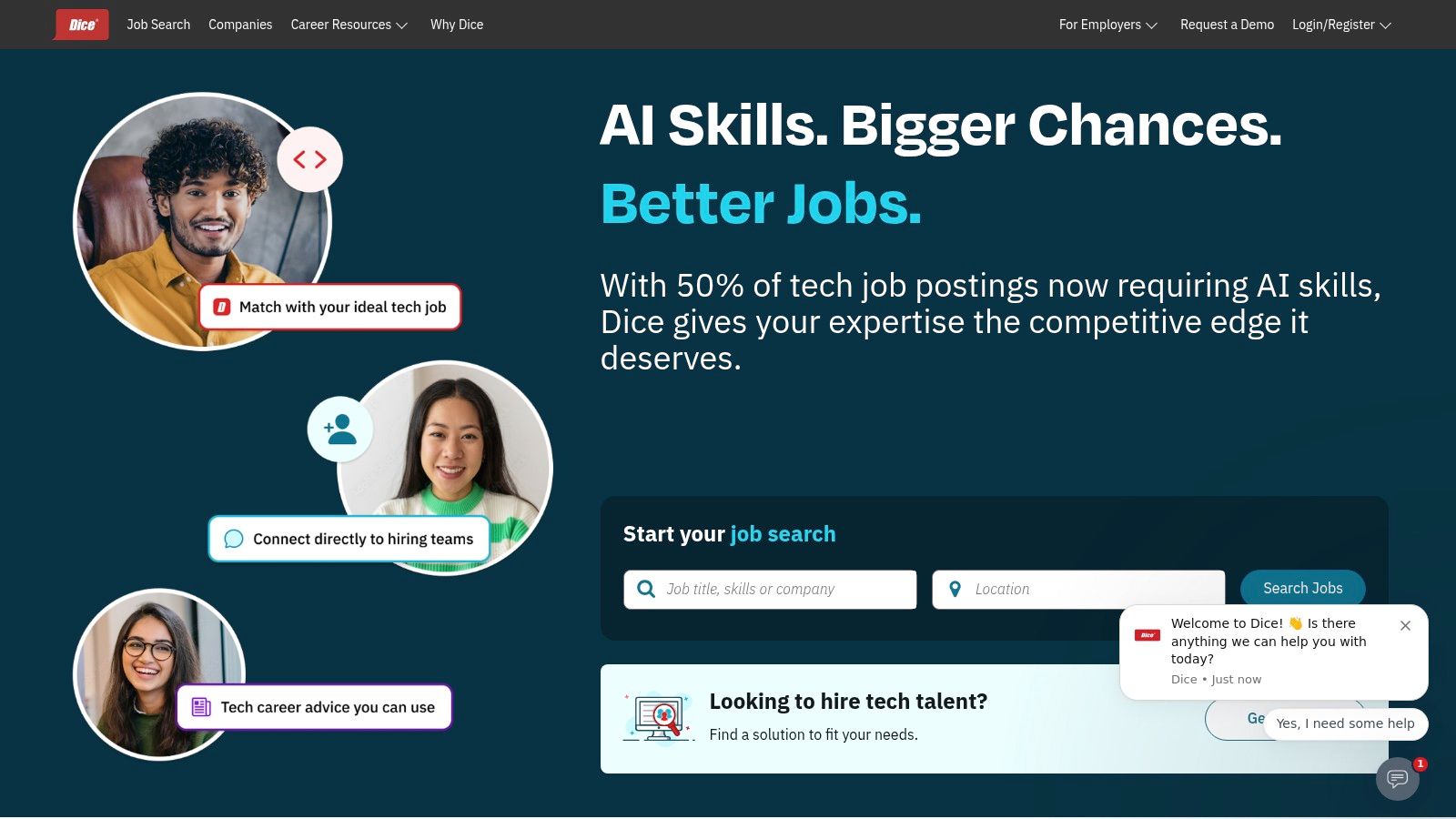
A veteran in the technology job market, Dice has carved out a niche as a premier destination for tech-specific roles, making it a powerful tool for finding devops engineer jobs remote. Unlike generalist job boards, its entire ecosystem is built for technologists. This focus translates into higher-quality listings for infrastructure-heavy roles, including SRE and Platform Engineering, with a significant number of both direct-hire and lucrative contract opportunities.
How to Maximize Dice for Your DevOps Job Search
Dice’s strength lies in its granularity and transparency, particularly around compensation. Many companies and staffing agencies post clear pay ranges or hourly rates upfront, allowing you to filter out roles that don't meet your financial expectations from the start. This saves valuable time and empowers you to negotiate more effectively.
To get the most out of the platform, fine-tune your profile with a comprehensive list of your technical skills. Dice’s search algorithm heavily weighs specific competencies like "AWS," "Terraform," and "Kubernetes," so a detailed profile increases your visibility to recruiters actively sourcing candidates for remote DevOps positions. Make your profile a mirror of the ideal job description.
Actionable Tip: Focus on the "Contract" filter if you're looking for high-paying, project-based work. Many Web3 companies and established tech firms use contractors for specific infrastructure build-outs. These roles are not only lucrative but also excellent for rapidly gaining experience with new technologies and advancing your career skillset.
Key Features and Strategic Application
Dice’s interface is built for the technical job seeker, with filters that go beyond simple keywords. You can drill down by employment type, security clearance requirements, and specific tech stacks.
Here’s how to use its features to your advantage:
- Tech-Centric Filters: Use the skills filter to specifically search for roles matching your expertise, such as "Helm," "Ansible," or "CI/CD." This narrows the field to the most relevant devops engineer jobs remote.
- Pay Transparency: Prioritize listings that include a salary or hourly rate. Use this data to benchmark your own market value and enter salary negotiations with confidence, backed by real-world data from the platform.
- Recruiter Messaging: The platform facilitates direct communication with recruiters. When you see a compelling role, a polite, concise message introducing yourself and highlighting your key qualifications can get your resume to the top of the pile and begin building a professional relationship.
While the high volume of staffing-agency posts can sometimes lead to duplicate listings, the platform's focus on tech roles means you're less likely to sift through irrelevant positions. For those interested in enterprise-level or government-contracting DevOps work, Dice is an indispensable resource.
Visit the website: Dice
5. Built In
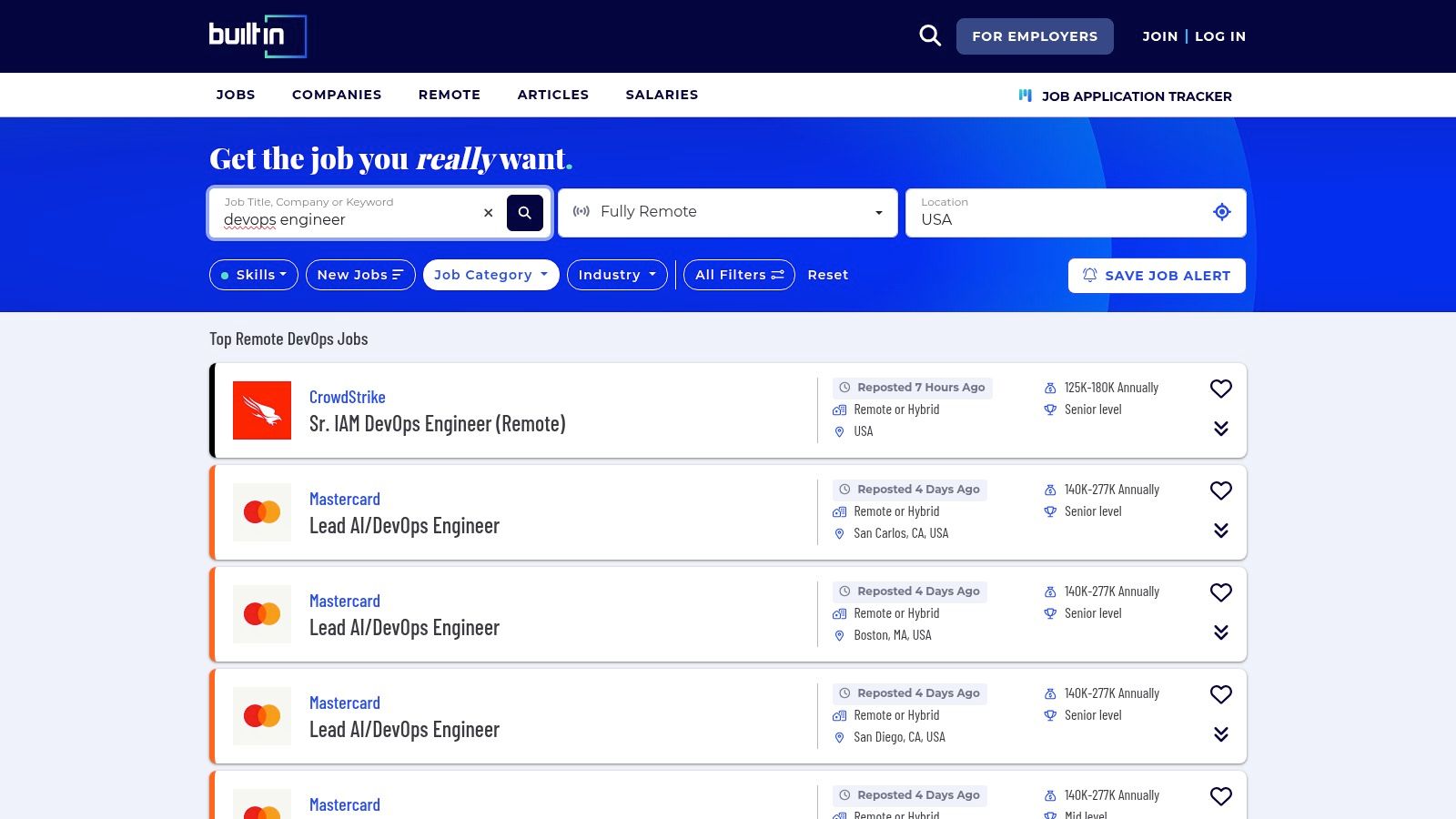
Built In is a tech-centric job platform that cuts through the noise of generalist job boards. For professionals seeking devops engineer jobs remote, it offers a curated experience with a focus on high-signal roles at innovative tech companies, including those in the Web3 and blockchain sectors. Its real advantage lies in the rich, contextual data it provides, allowing you to go beyond the job description and understand a company's culture, tech stack, and benefits before you even apply.
How to Maximize Built In for Your DevOps Job Search
The key to using Built In effectively is to leverage its detailed company profiles for interview preparation. Instead of just applying to a job, treat each listing as a research opportunity. Dive into the company’s profile to see its engineering culture, funding rounds, and the specific technologies it uses. This information is a goldmine for tailoring your resume and preparing for interviews.
For example, if a profile highlights a company’s extensive use of "AWS Lambda" and "Argo CD," you can prominently feature your experience with those tools in your application and prepare specific project examples to discuss during the interview. This demonstrates a proactive interest and an immediate potential fit.
Actionable Tip: Use the company profiles to formulate specific, insightful questions for your interviews. Asking, "I saw your tech stack includes both Ansible and Terraform. How does the team decide which tool to use for a new project, and what's the long-term vision for infrastructure as code?" shows you've done your homework and are thinking like a future team member.
Key Features and Strategic Application
Built In’s platform is designed to streamline the application process and provide deep insights, making your search for a remote DevOps position more efficient and targeted. While its total volume of listings is smaller than massive aggregators, the quality is often higher.
Here’s how to use its features to your advantage:
- Rich Company Profiles: Before applying, scrutinize the profile for the company’s tech stack, benefits, and salary bands. Use this information to tailor your resume and to decide if the company's engineering culture aligns with your career progression goals.
- "Fully Remote" Filters: The platform clearly distinguishes between fully remote and hybrid roles. Use this filter to ensure you are only seeing opportunities that match your location-independent career goals.
- AI Application Assistant: This tool can auto-fill repetitive parts of applications, saving you valuable time. Use this saved energy to focus on crafting a compelling cover letter and customizing your resume for your top-choice roles.
- Job Match Mode: Opt in to receive personalized role recommendations based on your skills and preferences. This can surface interesting remote DevOps roles you might have missed in a manual search.
Although some listings may be marked "remote or hybrid," requiring you to double-check the location details, Built In's focus on the tech industry makes it an invaluable resource. The platform’s emphasis on transparency and company context helps you make more informed career decisions.
Visit the website: Built In Remote DevOps Jobs
6. We Work Remotely
As one of the original and largest remote-only job boards, We Work Remotely is a highly curated platform for professionals seeking location-independent careers. For those searching for devops engineer jobs remote, its dedicated "DevOps and Sysadmin" category offers a focused stream of high-quality opportunities. The platform’s key differentiator is its paid-listing model for employers, which acts as a natural filter against spam and low-effort postings, ensuring the roles you see are from serious companies committed to remote work.
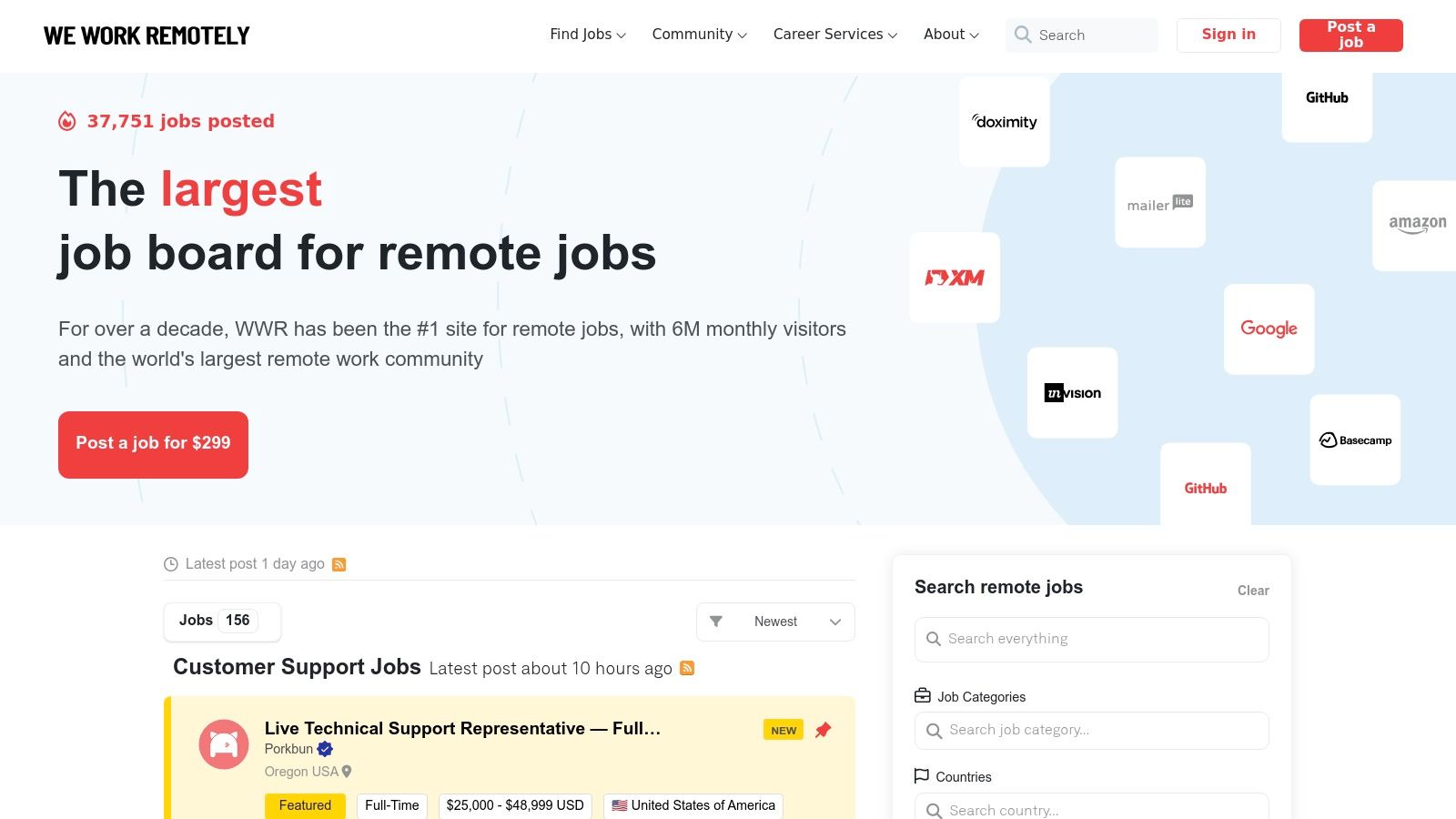
How to Maximize We Work Remotely for Your DevOps Job Search
Success on We Work Remotely requires a proactive and strategic approach, as job volume is lower than on generalist sites. First, create a comprehensive profile that highlights your remote work readiness and specific DevOps competencies like IaC (Infrastructure as Code), container orchestration (Docker, Kubernetes), and cloud platform expertise (AWS, GCP, Azure).
Next, fully utilize the platform's community and alert features. Don't just browse; set up precise job alerts for keywords like "Remote DevOps Engineer," "SRE," and "Cloud Engineer" to get instant notifications. Engage with their community resources, which often provide insights into what remote-first companies are looking for in candidates, helping you tailor your application and interview approach.
Actionable Tip: Many listings on We Work Remotely are from established remote-first companies. Before an interview, research the company's "remote culture" on their blog or social media. Mentioning their specific remote work philosophies (like asynchronous communication practices) shows genuine interest and demonstrates cultural fit—a key hiring factor for distributed teams.
Key Features and Strategic Application
We Work Remotely’s clean interface and remote-centric design make for a streamlined job-seeking experience. While it may require a subscription for some job seeker features, this barrier can work in your favor by reducing the competition for each role.
Here’s how to use its features to your advantage:
- Dedicated Category: Navigate directly to the "DevOps and Sysadmin" section to avoid sifting through irrelevant roles. This focus is a significant time-saver.
- GeoLock Filter: Look for postings with a "US Only" or other country-specific tags if you need to stay within a particular jurisdiction for legal or tax reasons. Applying only to relevant roles respects the hiring manager's time and your own.
- Job Alerts: Create highly specific alerts. Instead of a general "DevOps" alert, try "Senior DevOps Engineer Terraform" to capture roles that perfectly match your skill set.
- Community Resources: Explore their articles and guides on remote work. Applying the advice found there can strengthen your resume and interview performance, showing employers you understand the unique demands of a remote environment.
While the paid subscription and smaller job pool are potential downsides, the high signal-to-noise ratio makes it an essential tool. The quality of devops engineer jobs remote found here is often superior, making it a worthwhile investment for serious candidates.
Visit the website: We Work Remotely
7. Remote OK
Remote OK is a highly focused, remote-only job board that has become a go-to resource for tech professionals. Its streamlined interface and dedicated categories for DevOps and Cloud roles make it an efficient tool for anyone searching for devops engineer jobs remote. The platform’s key differentiator is its transparency, often displaying salary ranges and application statistics, which provides valuable intelligence for job seekers.
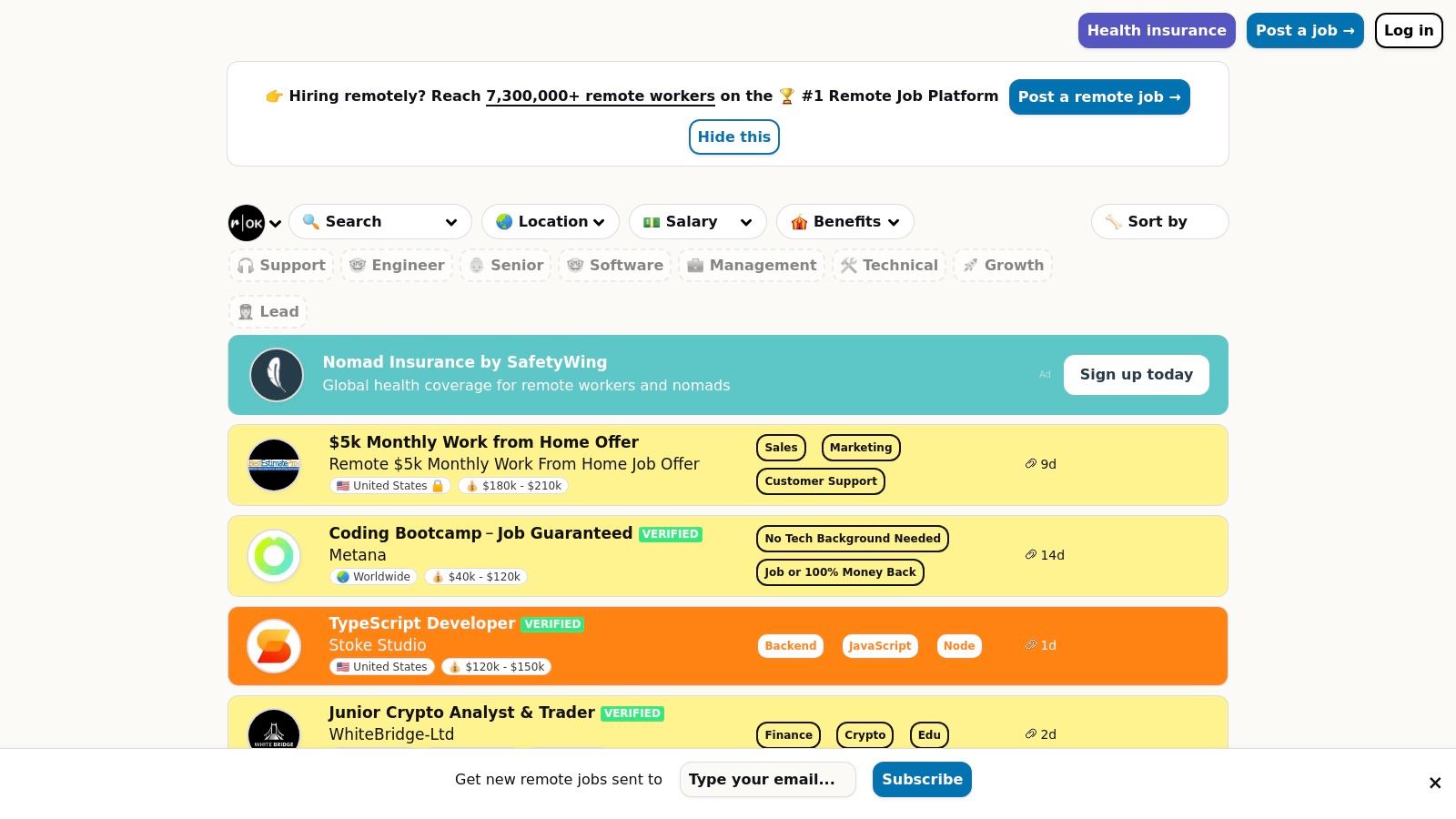
How to Maximize Remote OK for Your DevOps Job Search
Success on Remote OK comes from using its data-rich environment to your advantage. Unlike generic job boards, it often shows you how many people have viewed or applied for a role. This allows you to gauge the competition level and decide where to invest your application efforts.
Start by setting up targeted searches. Use specific keywords like "DevOps," "Cloud Engineer," "SRE," combined with tool-specific terms like "Kubernetes" or "AWS." Pay close attention to the tags associated with each listing, as they provide a quick summary of the required tech stack. This helps you quickly identify roles that are a strong match for your skills.
Actionable Tip: When you see a job with a high number of applications, don't be discouraged. Instead, use it as an opportunity to differentiate yourself. Tailor your resume to precisely match the keywords in the job description and write a compelling cover letter that directly addresses the company's stated needs. A personalized application will always stand out from a flood of generic ones.
Key Features and Strategic Application
Remote OK’s strength lies in its simplicity and focus on remote work. Its features are designed to get you to relevant listings quickly, without the noise of hybrid or on-site roles.
Here’s how to use its features to your advantage:
- Application Statistics: Use the "views" and "applied" metrics to prioritize your efforts. A role with high views but low applications might indicate a niche skill set is required—a huge opportunity if you fit the profile.
- Targeted Categories: Navigate directly to the "DevOps" and "SysAdmin" categories to filter out irrelevant engineering roles. You can further refine your search by region, such as the "United States," to ensure timezone and legal compatibility.
- Salary Transparency: Many listings include a salary range. Use this information not only to filter for roles that meet your financial requirements but also as a data point for negotiation when you receive an offer, ensuring you are compensated at market rate.
While some postings redirect to external application systems, the platform’s core value is its high concentration of quality, remote-first tech roles. The transparent data it provides empowers you to be more strategic and efficient in your search for a remote DevOps position.
Visit the website: Remote OK
Remote DevOps Engineer Jobs: 7-Site Comparison
| Platform | Implementation Complexity 🔄 | Resource Requirements ⚡ | Expected Outcomes ⭐ / 📊 | Ideal Use Cases 💡 | Key Advantages ⭐ |
|---|---|---|---|---|---|
| Blockchain Jobs | Low — niche, straightforward posting/workflow | Low‑moderate — targeted audience; pricing via contact | ⭐⭐⭐⭐ — high relevance; 📊 curated fresh listings | Hiring Web3/crypto specialists, cross‑discipline remote roles | Niche audience, curated feeds, fast discovery |
| LinkedIn Jobs | Moderate — broad feature set and networking tools | Moderate‑high — complete profile, optional Premium needed for insights | ⭐⭐⭐⭐ — wide reach; 📊 strong network effects improve responses | Broad US hiring, leverage referrals and Easy Apply | Largest professional network; strong referral visibility |
| Indeed | Low — simple search/apply flow | Low — free listings common; paid options available | ⭐⭐⭐ — very high volume; 📊 salary/employer ratings on many posts | High‑volume job search, quick applications, salary research | Massive coverage and quick‑apply functionality |
| Dice | Moderate — tech‑focused filters and recruiter messaging | Moderate — employer tools for contract/full‑time listings | ⭐⭐⭐⭐ — good for infrastructure roles; 📊 clear pay bands often shown | Infrastructure/DevOps, contract and enterprise tech hiring | Tech specialization, transparent compensation on many posts |
| Built In | Low — curated tech platform with AI tools | Moderate — richer company profiles require employer input | ⭐⭐⭐⭐ — high signal quality; 📊 strong company context aids fit | Candidates needing company tech stack and benefits detail | Rich company pages, AI application helpers, curated listings |
| We Work Remotely | Low — remote‑only simple workflow | Low‑moderate — paid employer posts; seekers may subscribe | ⭐⭐⭐ — remote‑first quality; 📊 paid posts reduce spam | Remote‑only hiring, long‑term remote job searches | Remote‑focused audience and community; fewer low‑quality posts |
| Remote OK | Low — streamlined remote categories and alerts | Low — high traffic with optional employer features | ⭐⭐⭐⭐ — strong remote engineering flow; 📊 visible engagement stats | Finding remote DevOps/Cloud roles with transparency | Remote focus, engagement metrics, wide engineering audience |
Build Your Future: Taking the Next Step in Your Web3 DevOps Career
You've explored the landscape of opportunities and the premier platforms for discovering your next role. From the hyper-focused, Web3-native listings on Blockchain Jobs to the vast professional networks of LinkedIn and the tech-centric communities on Built In, it's clear the demand for skilled DevOps engineers in the decentralized space is exploding. Landing one of the top devops engineer jobs remote is no longer just about knowing where to look; it's about knowing how to strategically position yourself for success.
The journey from browsing job boards to accepting a competitive offer requires a multi-platform, multi-faceted approach. Think of these tools not as isolated websites but as an integrated toolkit for your career advancement. Each platform offers a unique advantage, and the most successful candidates leverage them in concert, building a powerful, cohesive professional narrative that resonates with Web3 recruiters.
Synthesizing Your Strategy for Maximum Impact
Your primary takeaway should be this: a generic approach yields generic results. The Web3 ecosystem values specificity, demonstrated passion, and quantifiable impact. As you move forward, focus on translating your experience into the language of decentralization, even if your background is in traditional tech.
Here’s a breakdown of actionable steps to consolidate what you've learned and propel your job search forward:
- Create a "Master" Web3 Resume: Before tailoring applications, build a comprehensive master resume. This document should detail every relevant project, technology, and achievement. For each point, use the STAR method (Situation, Task, Action, Result) and focus on metrics. Instead of saying "Managed CI/CD pipelines," say "Architected and implemented a new CI/CD pipeline using Jenkins and ArgoCD, reducing deployment times by 40% and cutting infrastructure costs by 15%."
- Platform-Specific Profile Optimization: Your online presence is your digital handshake. Optimize your profiles on platforms like LinkedIn and Built In with keywords relevant to Web3 DevOps, such as "blockchain infrastructure," "node operation," "smart contract deployment pipelines," "IPFS," and "container orchestration with Kubernetes." This ensures you appear in recruiter searches for devops engineer jobs remote.
- Tier Your Applications: Not all applications are created equal. Divide your efforts into tiers.
- Tier 1 (High-Priority): These are your dream roles found on specialized boards like Blockchain Jobs. For these, invest maximum effort: write a custom cover letter, tailor your resume heavily to the job description, and research the company's protocol, roadmap, and recent announcements.
- Tier 2 (Strong Fit): These might come from broader platforms like LinkedIn or We Work Remotely. Use a semi-customized version of your resume that highlights the most relevant skills.
- Tier 3 (Exploratory): For interesting but less-than-perfect fits, a quick application with your optimized master resume can still open doors and provide valuable interview practice.
Preparing for the Web3 Interview
Once you secure interviews, the focus shifts to demonstrating both your technical acumen and your cultural fit for a decentralized, often fully remote, environment.
- Show, Don't Just Tell: Be prepared with a portfolio or GitHub repository that showcases your infrastructure-as-code (IaC) skills, CI/CD configurations, and any personal projects related to blockchain. Talk through a specific problem you solved and the trade-offs you considered.
- Articulate Your "Why Web3": Every Web3 company will ask why you're passionate about the space. Have a genuine, well-reasoned answer that goes beyond financial incentives. Discuss the technological challenges, the philosophy of decentralization, or a specific protocol that fascinates you.
- Discuss Remote Work Proficiency: Highlight your experience with asynchronous communication tools (Slack, Discord, Telegram), your ability to self-manage complex projects, and your proactive approach to documentation. This is critical for any devops engineer jobs remote.
The path to a fulfilling career in Web3 DevOps is a marathon, not a sprint. It requires continuous learning, strategic networking, and a persistent, targeted application process. By using the tools and tactics outlined in this guide, you are no longer just a passive job seeker; you are the architect of your own career, building a future on the cutting edge of technology. The infrastructure of tomorrow's internet is being built today, and it needs your expertise.
Ready to move from planning to action? Stop wading through generic job boards and start exploring opportunities curated specifically for the decentralized world. Find your next high-impact role on Blockchain Jobs, the leading platform connecting top talent with innovative Web3 companies actively hiring for devops engineer jobs remote.