
7 Projects in Ruby: Boost Your Career in 2026

Your portfolio isn't a checklist. It's a hiring signal. Ruby has powered real production systems for major organizations, including Level 3 Communications, which used Ruby for the central data-collection part of its Unix Capacity and Planning system in the official Ruby success stories. That matters because it kills the lazy assumption that Ruby projects belong in the toy-app bucket.
Most advice about projects in Ruby still pushes beginners toward calculators, weather apps, and basic scrapers, even though actual hiring value sits in backend systems that show authentication, queues, APIs, caching, and observability. That gap is documented in the long-running ruby-projects list on GitHub. If you want interviews, build work that looks like the job.
Your portfolio is a product. It needs positioning, proof, and a clear message about what kind of engineer you are. If your personal site still reads like a random dump of GitHub links, fix that first with these key components for a personal site.
Then build projects in Ruby that tell one story: “I can ship production-grade backend software, and I can explain the tradeoffs.”
1. Ruby on Rails
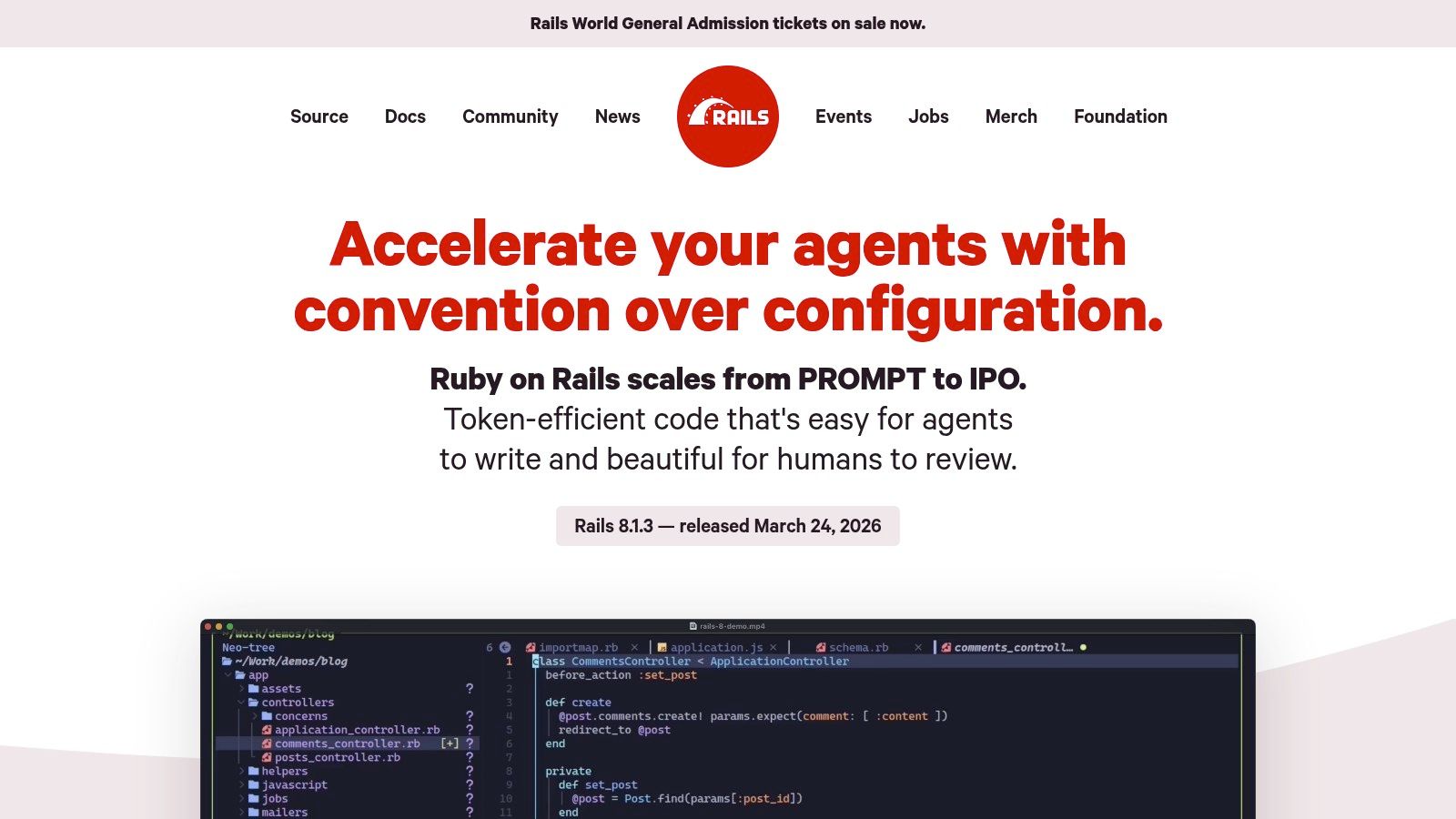
If you want the highest hiring ROI from one Ruby project, build it in Ruby on Rails. Rails is still the default proof that you understand how real Ruby teams ship product. It gives you the full stack most employers care about: models, controllers, background jobs, mailers, migrations, tests, and deployment conventions.
A strong Rails portfolio project should look like a real business system, not a clone tutorial. Build a subscription billing backend, an internal admin tool, a marketplace API, or a wallet activity dashboard. Give it auth, role-based access, audit trails, background processing, and error monitoring.
Why Rails pays off in interviews
A peer-reviewed case study of ChangingThePresent.org found that Rails let the team launch quickly and evolve the system with relatively small code changes as the site scaled, with convention-over-configuration and scaffold-driven development doing real work for the team in practice, as covered by InfoQ's case study on Rails at ChangingThePresent.org. That's exactly the kind of story hiring managers want to hear from you: fast iteration, sensible defaults, and engineering time spent on product logic instead of plumbing.
Don't pitch Rails as “easy.” Pitch it as a force multiplier.
Hiring angle: “I chose Rails because the job wasn't to admire architecture. The job was to ship a CRUD-heavy product fast, keep the code organized, and leave room for custom business logic.”
For career progression, Rails also maps cleanly to the kinds of jobs that pay backend engineers to own production systems. If you're targeting teams already hiring for that stack, study active staff Ruby on Rails roles in Web3 and shape your project around the same responsibilities: APIs, data integrity, async work, and maintainable application structure.
Best project to build
- Best choice: B2B operations platform with organizations, users, permissions, invoices, and admin reporting.
- Interview talking point: Explain your domain model and why some workflows stayed synchronous while others moved into jobs.
- Salary signal: Shows business impact thinking. Companies pay more for engineers who understand product workflows, not just controllers and views.
2. Hanami
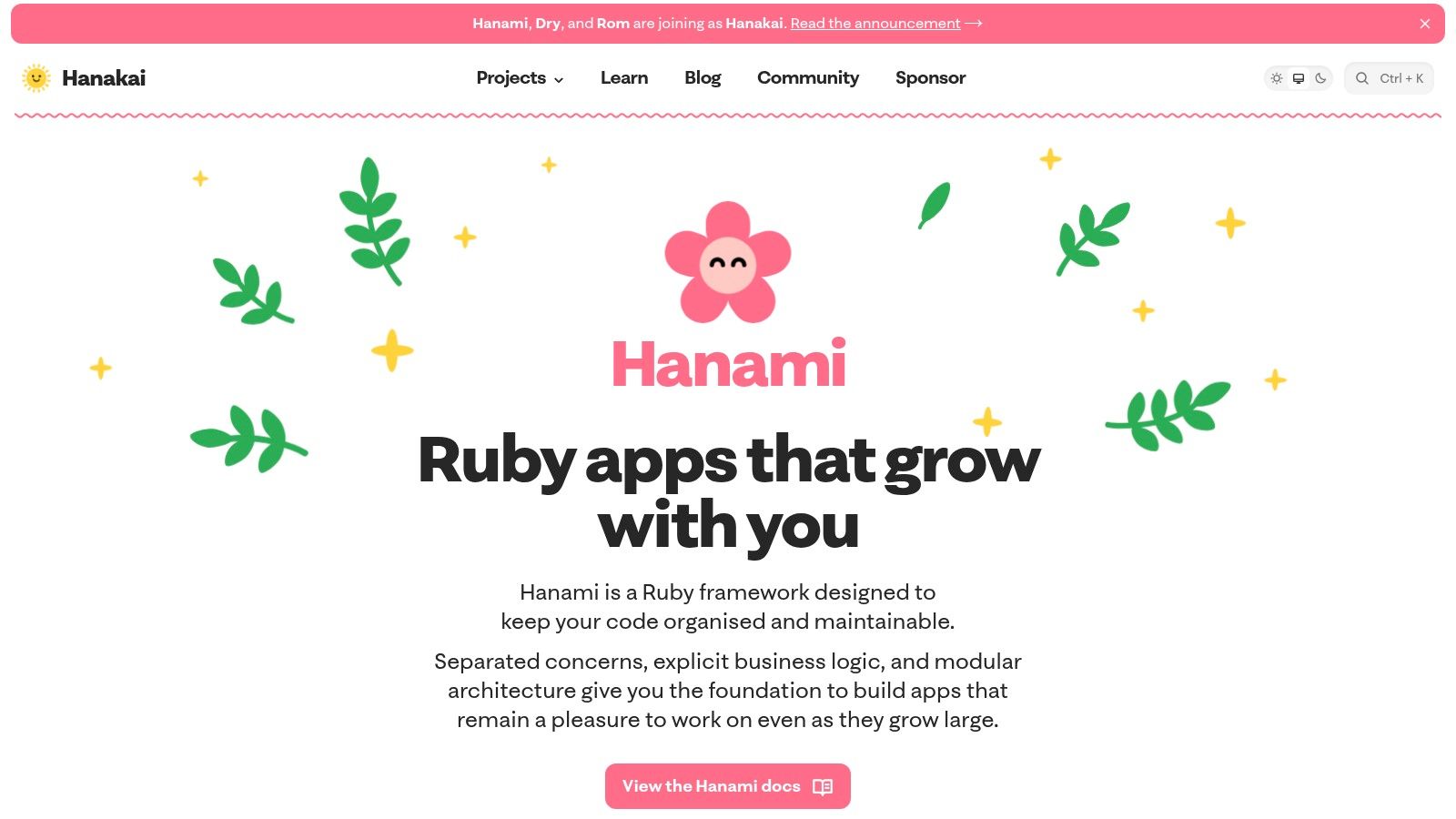
Build with Hanami when you want to signal architectural discipline. Rails says you can ship. Hanami says you can design boundaries.
That's useful if you're aiming for backend roles where maintainability matters as much as speed. Think fintech, data platforms, infrastructure-heavy startups, or any team that's tired of accidental complexity. A Hanami project tells a hiring manager you care about explicit dependencies, separation of concerns, and code that survives handoffs.
What Hanami proves
The mistake most candidates make with projects in Ruby is building something that only proves they followed a tutorial. Hanami pushes you in the opposite direction. You have to think about application slices, persistence choices, request flow, validation, and what belongs in the domain versus the transport layer.
That makes it a smart choice for a portfolio project like a compliance workflow engine, treasury reconciliation API, or a contract event ingestion service. Those project types force you to model business rules cleanly, and Hanami makes that visible.
Use newer Ruby features where they fit. The current gap in Ruby project advice is that most lists don't help learners connect modern Ruby features like Data objects, pattern matching, Fibers, and Ractors to meaningful project choices, a problem highlighted in this recent Ruby discussion on modern language features. Hanami is a good place to do that because the framework's explicitness makes language-level modeling decisions easier to discuss.
Build one project where you can explain every boundary. That's rarer than building one more polished UI.
Best project to build
- Best choice: Event-driven compliance API that receives payloads, validates them, stores normalized records, and triggers review workflows.
- Interview talking point: Walk through your boundaries between HTTP layer, validation, domain services, and persistence.
- Salary signal: Shows senior-code instincts. Teams pay more for engineers who reduce future maintenance cost.
3. Sinatra
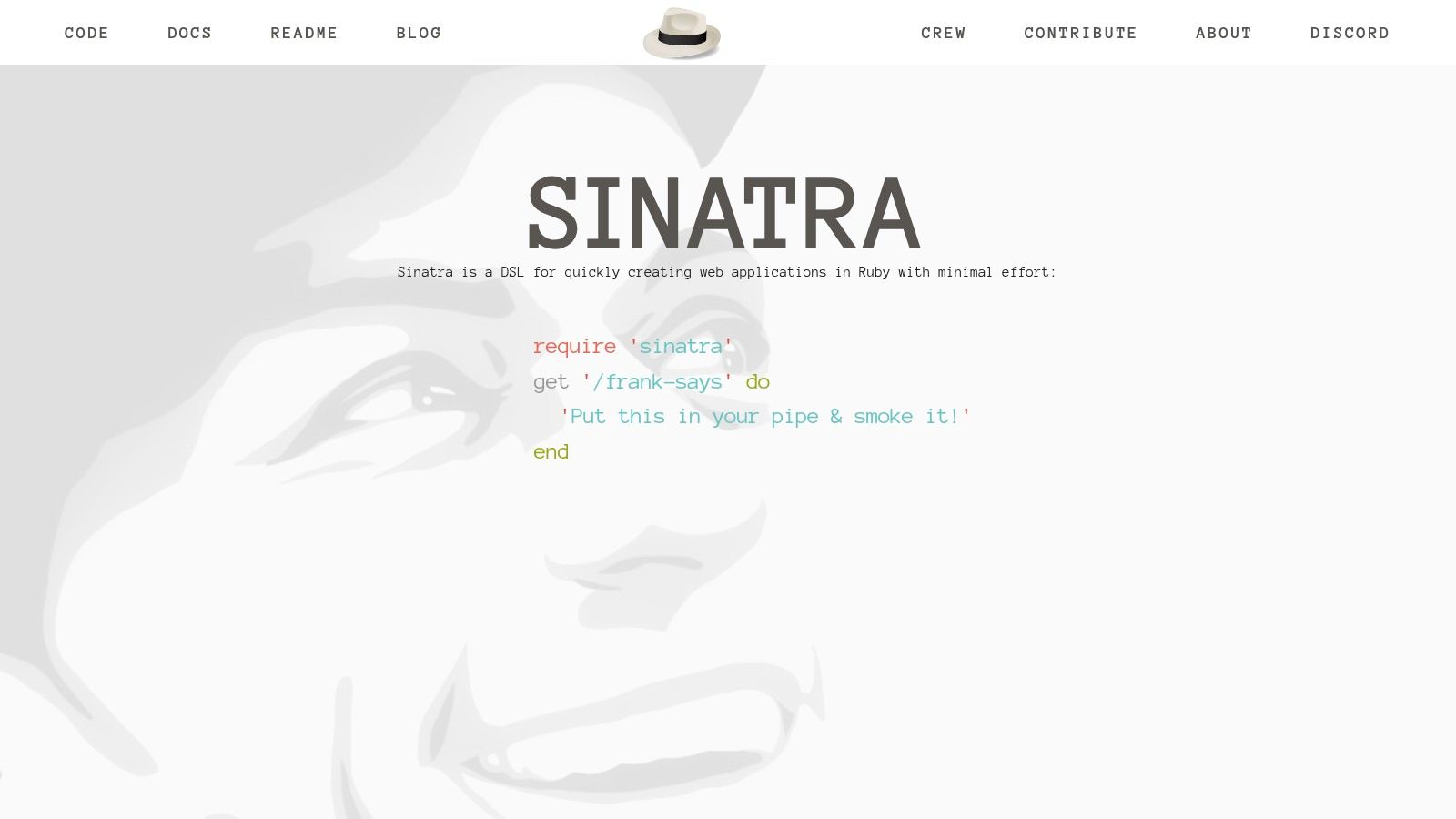
Use Sinatra when the point is speed and control. Not every good Ruby project needs a full framework. If you want to show you can build a clean microservice, webhook processor, or thin API edge service, Sinatra is the right tool.
This is especially valuable for Web3-adjacent roles. Protocol teams often need small services that verify signatures, consume events, expose internal endpoints, or relay data between systems. A Sinatra project fits that world better than a giant monolith.
Where Sinatra wins
Sinatra forces you to choose your own structure. That's the value. You show employers you understand Rack basics, middleware, request handling, error responses, authentication, and integration choices without hiding behind framework magic.
Good project ideas include a webhook ingestion service for on-chain events, a token-gated API proxy, or a signing service with audit logs. Keep the scope tight. Add request validation, idempotency protection, retry-aware downstream calls, and structured logs.
If you're trying to move from hobby code to paid engineering work, this kind of focused backend service matters more than another generic app. It teaches the habits that help you get a job as a programmer: ownership, debugging, communication, and clear technical decisions.
Best project to build
- Best choice: Webhook gateway that receives events, validates payloads, stores delivery attempts, and forwards clean messages to downstream systems.
- Interview talking point: Explain failure handling. What happens when the sender retries, your database is slow, or the downstream service is unavailable?
- Salary signal: Shows production realism. Companies pay more for engineers who think about edge cases before production finds them.
Small service, big signal. A well-scoped Sinatra app often says more about backend maturity than a half-finished full-stack clone.
4. Jekyll
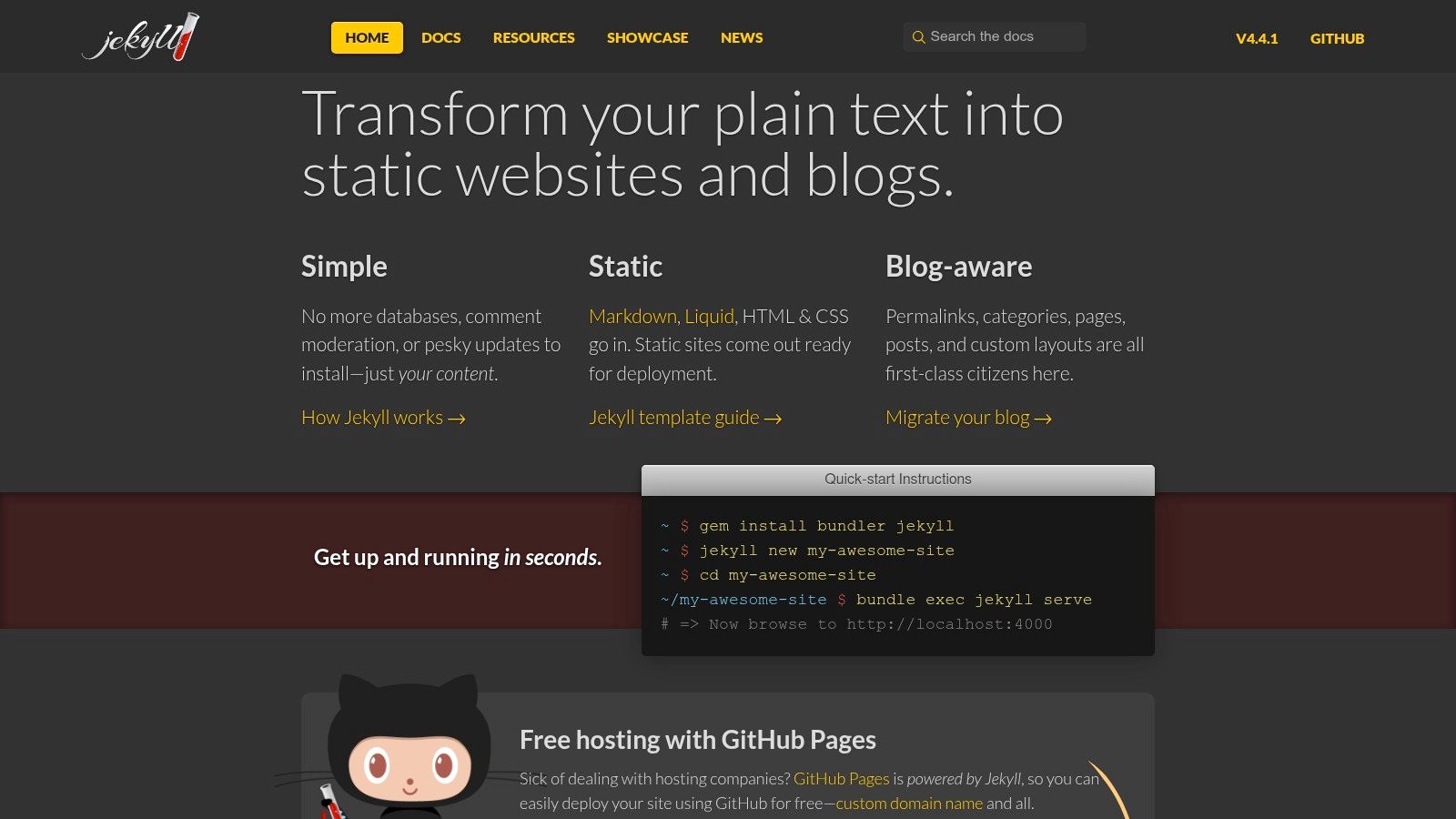
Most candidates underestimate Jekyll because it isn't flashy. That's a mistake. A strong Jekyll project can sharpen one of the most valuable career skills you can have: technical communication.
Hiring managers don't only buy code. They buy clarity. If you can build a documentation portal, engineering blog, or polished portfolio site in Jekyll, you're showing that you can explain systems, document tradeoffs, and package your work so other people can use it.
Why this matters for your career
Jekyll is one of the best projects in Ruby for engineers who need a fast credibility upgrade. Build a public docs site for your own API project. Publish architecture notes, setup guides, schema decisions, and postmortems. If you're applying to backend or platform roles, this is a force multiplier because it makes all your other projects easier to evaluate.
A candidate with decent code and excellent documentation often beats a candidate with better code and weak communication. Teams need people who leave clean handoffs, not mystery systems.
Use Jekyll for a project site that includes changelogs, API examples, deployment notes, and diagrams. If you're targeting Web3, document a simple wallet indexer, NFT metadata sync tool, or transaction monitoring service. Make the docs part of the product.
Best project to build
- Best choice: Developer documentation hub for one of your backend services, with setup docs, API references, architecture notes, and troubleshooting pages.
- Interview talking point: Explain why you documented certain decisions and what future contributors would need to understand first.
- Salary signal: Shows leadership behavior. Better-paid engineers reduce team confusion and onboarding pain.
5. Sidekiq
If your portfolio has no background jobs, it looks junior. Build something with Sidekiq. Async processing is one of the clearest lines between tutorial apps and production systems.
Scenarios that make many Ruby projects employable include: Payments settle later. Emails send later. reports generate later. Blockchain events arrive out of order. Imports fail halfway through. Sidekiq gives you the right arena to show retries, queue prioritization, idempotent workers, and job monitoring.
What Sidekiq tells employers
A project built around background work shows that you understand operational reality. It also aligns with how Ruby teams often structure production systems. A large-scale study of the Rails ecosystem analyzed 1,116 projects in a software engineering dataset, which reinforces that Rails exists inside a broad, multi-project dependency network rather than as isolated one-off apps. In plain English, hiring managers expect you to know how to reuse ecosystem tools instead of reinventing them.
Build a project like a payout processor, CSV import pipeline, notification engine, or blockchain transaction reconciler. Add dead-letter handling, job deduplication, and admin visibility into failed jobs.
Practical rule: Never put Sidekiq in your portfolio just to say you used it. Use it to prove you understand retries, idempotency, and operations.
That kind of project also sharpens the coding habits that matter in real jobs. If you need a focused way to improve, spend time on coding skill habits that carry into production work, then apply them directly to your worker design and failure recovery.
Best project to build
- Best choice: Async payout or reconciliation system with queues for ingestion, validation, settlement checks, and notifications.
- Interview talking point: Describe your retry strategy and how you prevent duplicate side effects.
- Salary signal: Shows production readiness. Companies pay more when they trust you with systems that can't be manually babysat.
6. Discourse
Discourse is the right project reference when you want to show platform thinking. Not just feature building. Platform thinking.
You don't need to build another forum from scratch. You need to customize, extend, integrate, or self-host something like Discourse and then explain the system around it. That shows plugin work, authentication flows, admin controls, webhooks, moderation tooling, and operational ownership.
Why Discourse stands out
A Discourse-based project is strong because it lives close to real product constraints. Communities need roles, abuse controls, notifications, content organization, SSO, and integration with internal tools. That means your portfolio can show more than CRUD. It can show policy, trust, extensibility, and system administration.
This also maps well to Web3 communities. A token or protocol team may need gated discussion spaces, contributor onboarding, governance education, and searchable long-form support content. Building a Discourse extension or deployment around those needs is more credible than building another generic “social app.”
The career upside is straightforward. If you can own a community platform with integrations, you're demonstrating product engineering plus operations plus stakeholder awareness. That's the kind of engineer who gets pulled into broader responsibility and better compensation bands.
Best project to build
- Best choice: Community operations platform using Discourse with SSO, custom moderation workflows, webhook integrations, and analytics exports.
- Interview talking point: Explain your extension points and what you changed without forking core behavior.
- Salary signal: Shows system ownership across app logic, user experience, and platform administration.
7. Mastodon
If you're targeting decentralized tech, Mastodon is one of the smartest Ruby-adjacent project references you can use. It connects Ruby on Rails work to federation, interoperability, identity, and community infrastructure.
That matters because decentralized hiring teams don't only want “blockchain experience.” They want engineers who understand distributed systems behavior, trust boundaries, async communication, and protocol-informed product design. Mastodon gives you a practical way to talk about those themes.
The Web3 relevance
The modern Ruby ecosystem is still active across open-source libraries, learning resources, and large production applications, and a 2024 ACM study found Ruby remains strongly associated with web application development in Stack Overflow and developer-survey data, as discussed in the ACM paper on Ruby activity and persistence. That's important if you're worried Ruby looks dated. It doesn't. It still maps to practical web product work, and Mastodon sits right at that intersection of mature app engineering and decentralized architecture.
A strong project here isn't “I cloned Mastodon.” It's better to self-host an instance, build an integration, contribute to moderation tooling, or create a service that consumes and analyzes federated activity. If you can explain federation tradeoffs clearly, you'll stand out in both backend and Web3 interviews.
The best Web3 candidates don't just know chains. They know how distributed software behaves when systems don't fully trust each other.
Best project to build
- Best choice: Federated analytics or moderation tool that consumes ActivityPub events and provides admin workflows or reporting.
- Interview talking point: Explain federation tradeoffs such as trust boundaries, eventual consistency, and moderation complexity.
- Salary signal: Shows decentralized systems literacy without abandoning core backend engineering fundamentals.
7 Ruby Projects: Feature Comparison
| Technology | Complexity 🔄 | Resources ⚡ | Expected outcomes 📊 | Ideal use cases 💡 | Key advantages ⭐ |
|---|---|---|---|---|---|
| Ruby on Rails | 🔄 Moderate, opinionated MVC that reduces decisions | ⚡ Medium, DB, app server, typical gems, optional background workers | 📊 High productivity; quick MVP→production and scalable monoliths | 💡 SaaS, web apps, APIs, fast prototyping to production | ⭐ Batteries‑included stack, large ecosystem, rapid iteration |
| Hanami | 🔄 Moderate, explicit, componentized architecture | ⚡ Low–Medium, lean runtime, integrates with ROM/dry‑rb | 📊 Highly maintainable, testable codebases for long‑term projects | 💡 Long‑lived apps, DDD, projects prioritizing clarity | ⭐ Clear boundaries, lightweight footprint, strong architecture |
| Sinatra | 🔄 Low, minimal DSL, minimal ceremony | ⚡ Very low, add only needed middleware/ORM | 📊 Fast prototypes and tiny services; limited built‑in structure | 💡 Microservices, webhooks, small APIs, internal tools | ⭐ Extremely quick to start and highly flexible |
| Jekyll | 🔄 Low, predictable static‑site build process | ⚡ Very low, static hosting (GitHub Pages), no runtime servers | 📊 Fast, secure static sites with low maintenance and cost | 💡 Blogs, documentation, marketing pages, portfolios | ⭐ Near‑zero ops with GitHub Pages integration and content workflows |
| Sidekiq | 🔄 Low–Medium, integrates into apps; concurrency considerations | ⚡ Medium, requires Redis and operational familiarity; paid features optional | 📊 Reliable, high‑throughput background job processing with retries/scheduling | 💡 Async jobs, email, batch processing, heavy background workloads | ⭐ Proven performance, mature patterns, dashboards and scheduling |
| Discourse | 🔄 High, full forum platform with many subsystems | ⚡ High, DB, Redis, search, email, hosting or managed plan | 📊 Feature‑rich community forum with robust moderation and extensibility | 💡 Product forums, developer communities, knowledge hubs | ⭐ Enterprise moderation, plugin/theme ecosystem, open‑source core |
| Mastodon | 🔄 High, federation (ActivityPub) adds protocol complexity | ⚡ High, server resources, federation ops, monitoring and deliverability | 📊 Decentralized social platform with data ownership and cross‑instance interaction | 💡 Self‑hosted social communities and federated networks | ⭐ Ownership/control, Fediverse interoperability, mature codebase |
From Code to Career: Your Next Steps
The wrong way to build projects in Ruby is to collect tools. The right way is to pick one project that matches the job you want, then build it thoroughly enough that you can defend every technical decision.
If you want a backend application role, Rails is still the clearest path. If you want to show cleaner architecture, pick Hanami. If you're aiming at microservices or event-handling work, use Sinatra. If your weak spot is communication, Jekyll can upgrade how employers evaluate every other project you have. If you want to look production-ready, add Sidekiq. If you're interested in platform or community systems, use Discourse. If you're aiming at decentralized products, Mastodon gives you a stronger story than another generic dApp frontend.
Your next move should be narrow and concrete. Pick one role. Pick one project. Define the system boundaries before you write code. Then finish the project to the point where you can demo the app, explain the architecture, discuss tradeoffs, and show the documentation. Most candidates don't do all four.
That last part is where compensation starts to move. Higher-paying engineers usually do more than code. They scope better, write clearer, communicate tradeoffs, and make systems easier for other people to operate. Your portfolio should prove those habits before an employer takes the risk of hiring you.
Don't wait until your projects are “perfect.” Ship one that looks like real work. Add a clear README, screenshots, architecture notes, and a short write-up on why you made the choices you made. Then start applying in places where backend and decentralized-system experience is valued. If you want a broader search outside generic job boards, explore open positions and compare your portfolio against the responsibilities those teams list.
A portfolio isn't about showing everything you can build. It's about making one strong argument: you're already doing the kind of work they're hiring for.
If you're ready to turn solid Ruby projects into a real job search, start with Blockchain Jobs. It's one of the few platforms built around the kinds of backend, infrastructure, and decentralized product roles where strong Ruby, Rails, API, and systems-thinking experience can stand out fast.